20x leads and the first mentions in ChatGPT: How Organic Pareto™ rebuilt OKCroisiere’s SEO in 9 months
-
20x more qualified leads in nine months, with higher buying intent
-
2.7x organic traffic, surpassing the site’s all-time records
-
First direct leads from ChatGPT, as a side effect of deeper content
-
+50% organic traffic and roughly +10% leads within the first four months
Meet the agency
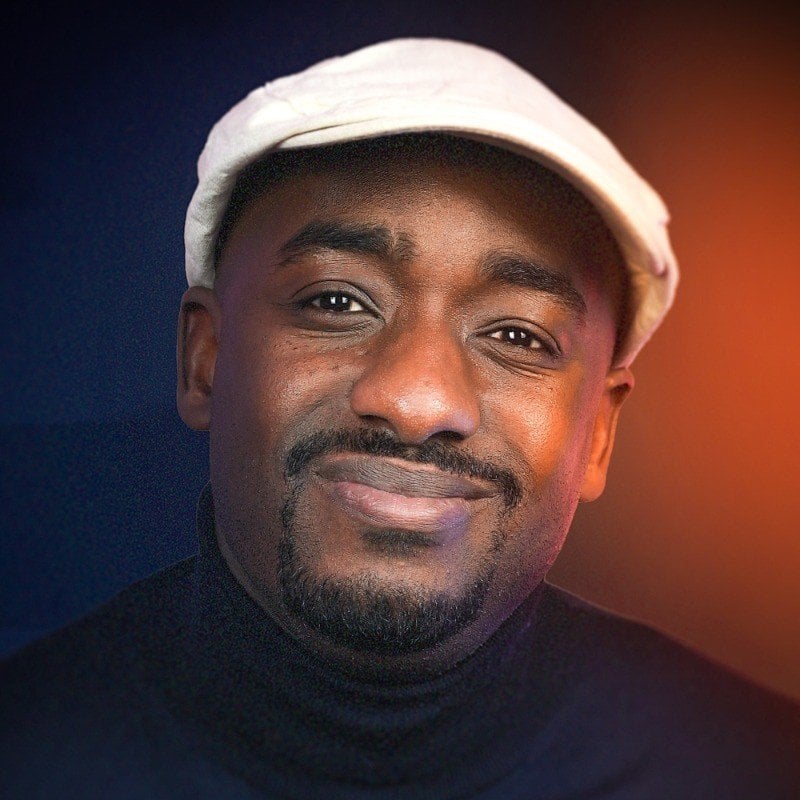
Organic Pareto™ is an SEO consultancy built around a business-first approach to organic search, working with SMBs, tradespeople, comparison sites, and e-commerce businesses that want their website to behave like a predictable business asset. Its work spans conversion-oriented content strategy, local SEO, and e-commerce SEO across construction, travel, SaaS, and B2B/B2C services. The practice is led by Bilkher Diakhaté, lead SEO consultant with more than 12 years in organic search, supported by a team he personally trained through his SEO Pareto™ training program.
Meet the client
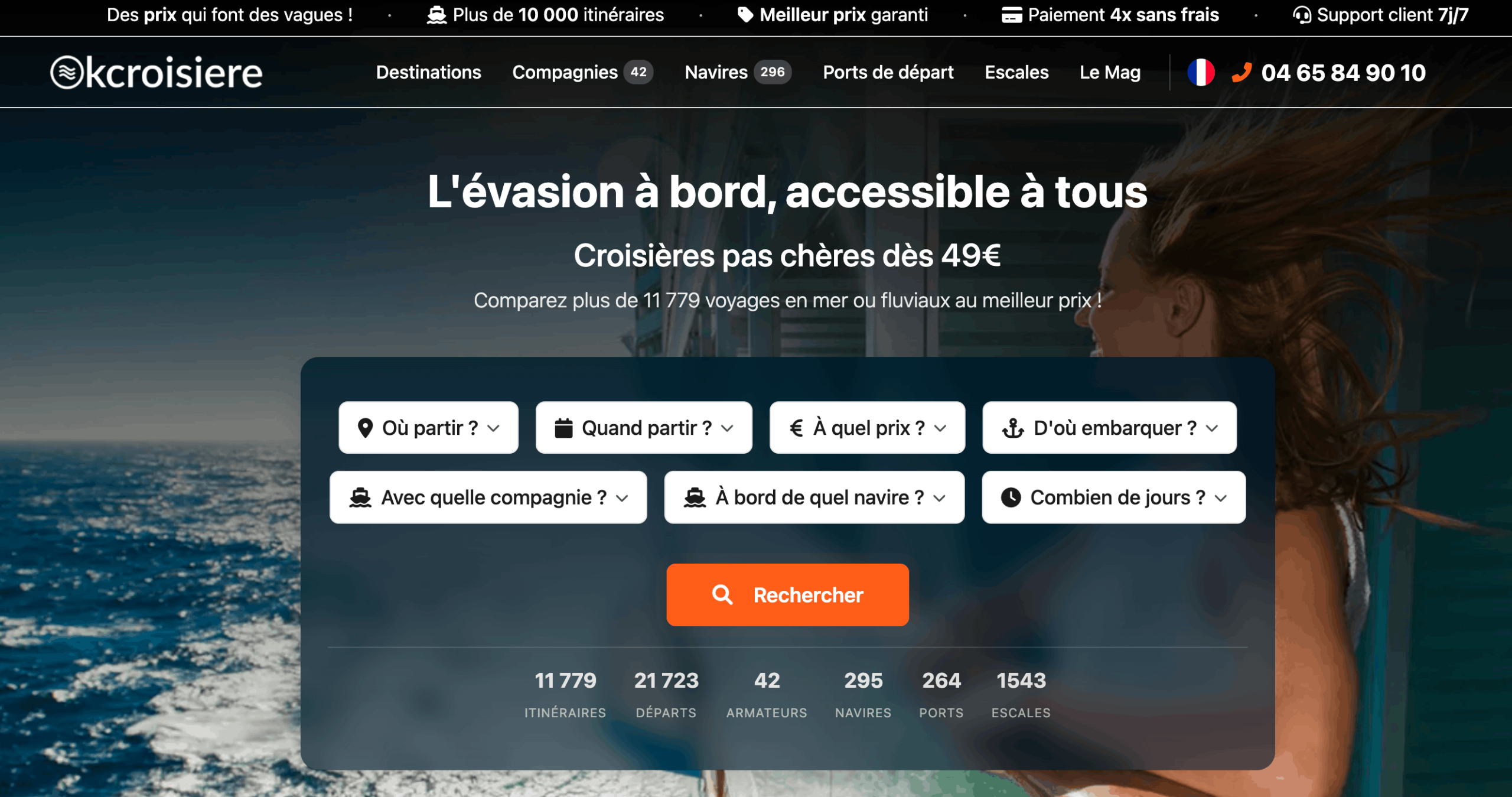
OKCroisiere.fr is a budget cruise comparison site operating in online travel, an ultra-competitive sector dominated by major booking and travel players. It was founded by Kamel Belgacem, an entrepreneur with a product manager background who ran the site’s SEO entirely in-house before this engagement.
The Challenge: Effort without a lever
OKCroisiere had content and organic traffic, but the traffic was not turning into qualified leads, and growth had stalled. The site was busy without moving forward.
Before this collaboration, the picture looked like this:
- Organic traffic was present but flat, well below what the site’s catalogue could support.
- SEO effort was scattered across countless micro-optimizations with no guiding priority.
- Content had been produced without a conversion logic or an architecture built around buyer intent.
- There was no deliberate focus on the small share of products and pages responsible for most of the revenue.
Kamel had consumed a large volume of SEO advice and tested widely, yet without a clear lever the effort kept returning diminishing results. The real catalogue had no reliable, repeatable way to convert search demand into the qualified leads the business needed to grow.
The Strategy: Put business back at the center of SEO
The approach replaced scattered activity with a single organizing principle, the 20/80 method.
Identify the flagship products that generate the bulk of revenue, build a complete content cluster around each one, and structure the site around the questions real buyers ask rather than the suggestions of a generic keyword tool.
Step 1: Find the real problems in the data
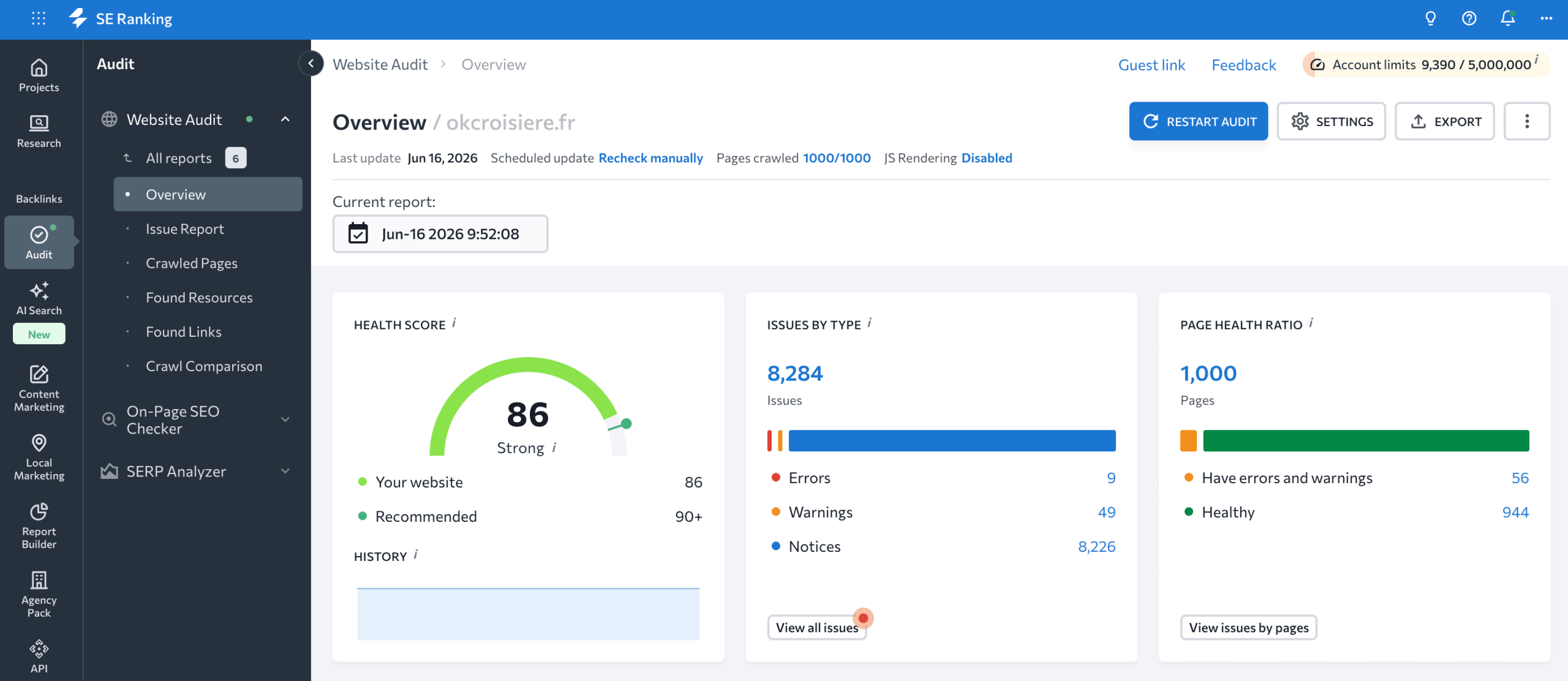
A full Website Audit surfaced the technical foundation issues and revealed high-potential pages that were underused or cannibalizing each other.
Competitive Research mapped how the dominant players structured their pages on high-commercial-value cruises, which exposed angles worth contesting on the flagship ships.
Keyword Research then mapped the queries cruise buyers actually use, around cabins, itineraries, onboard restaurants, ports of call, reviews and prices, instead of generic queries that bring traffic without intent.
Step 2: Decide with data, not instinct
The audit data made the 20/80 call concrete.
The roughly 20% of products, the flagship ships, sat behind about 80% of revenue, and the decision was to put the entire effort there while deliberately ignoring the rest.
Content would follow the real buying journey: the questions asked on sales calls and the objections that come up before someone books.
Step 3: Build clusters around each flagship ship
Each flagship ship got a complete cluster, a main page supported by dedicated pages for cabins, restaurants, activities, reviews and specifications. Key category pages were rewritten with precise semantic targeting guided by On-Page SEO Checker data and validated against the competing pages already ranking.
The arguments that closed bookings over the phone were translated into structured on-page sections, so the content carried the same persuasion that worked in conversation.
The rollout followed a proof-of-concept logic. Build the system on one ship, validate the result, then scale to the next. The first cluster returned a 10x lift on its category page almost immediately, which validated the model before any wider rollout.
Step 4: Monitor and adjust without attachment
Rank Tracker tracked ranking movement by ship cluster and cruise category, while conversion rates were watched at the category-page level. Decisions stayed data-led: what worked was scaled, what did not was cut, without emotional attachment to any single page.
The impact: From scattered effort to a system that compounds
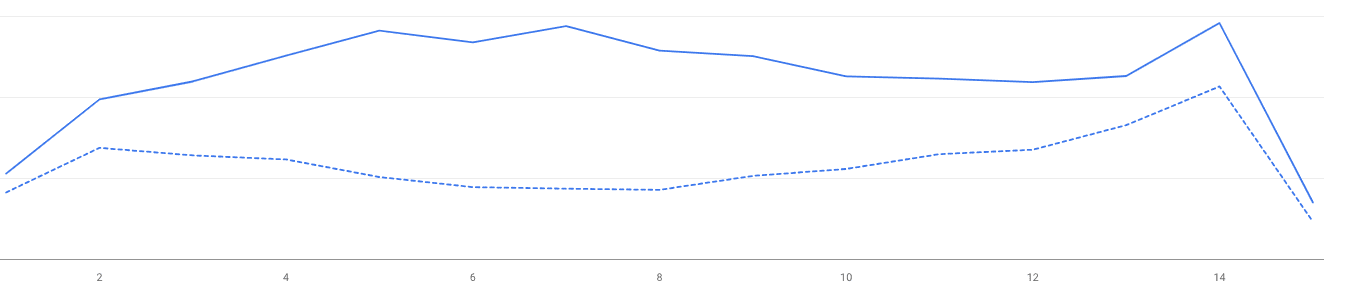
Within the first four months, organic traffic rose by 50% and qualified leads by about 10%. Over nine months, the gains consolidated into records the site had never reached.
After (9 months)
2.7x, surpassing all-time records
After (9 months)
20x, with higher intent
After (9 months)
First direct conversions
2.7x, surpassing all-time records
20x, with higher intent
First direct conversions
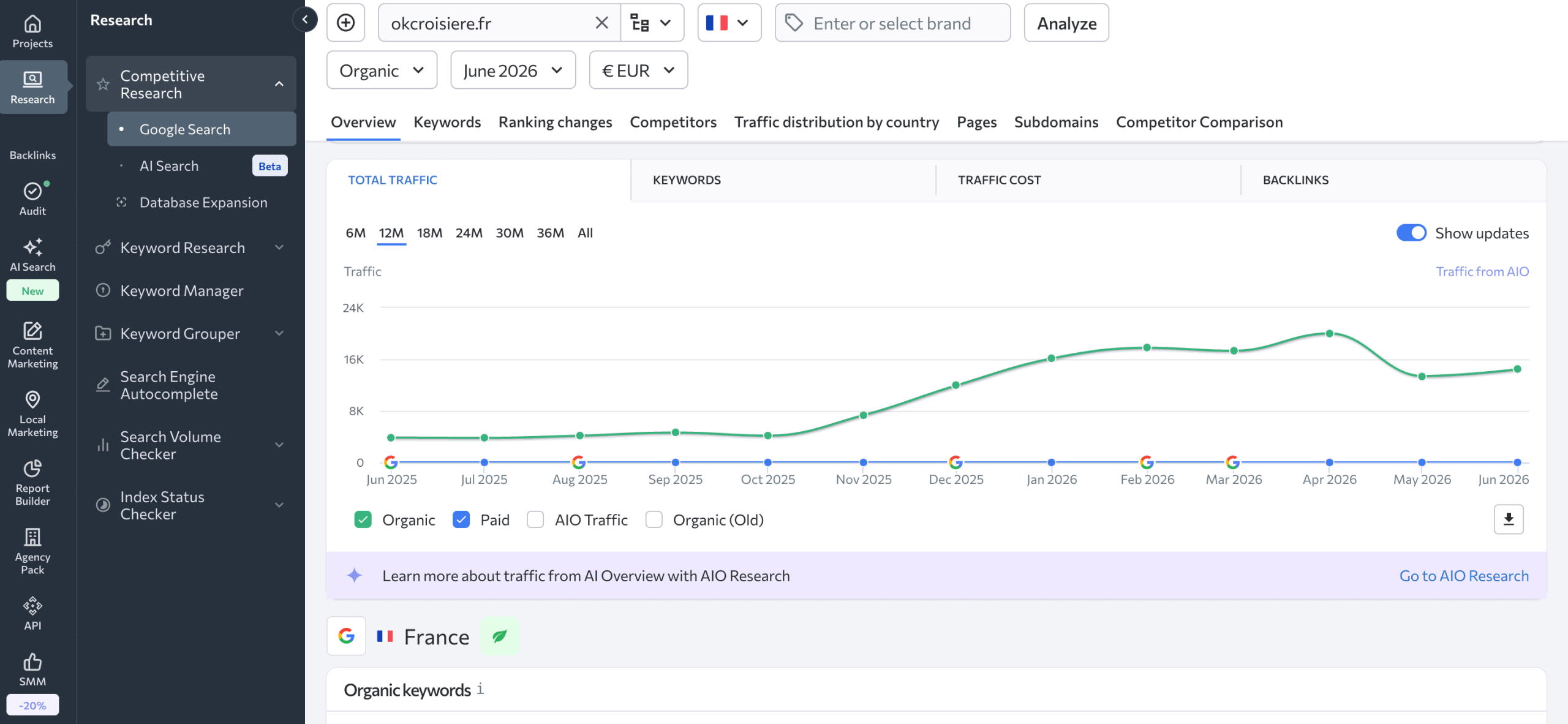
The lead result is the one that matters most for the business. A 20x increase would be notable on its own. What made it count was the quality: better-qualified prospects, further along the buying journey, which lifted conversion rates rather than simply filling the top of the funnel.
Why did the same strategy also win in ChatGPT?
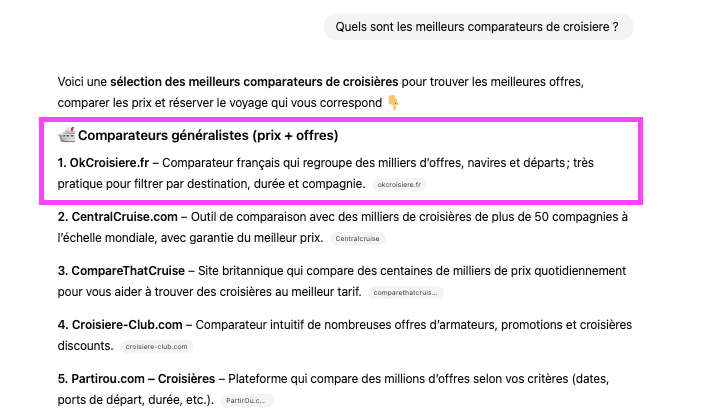
The ChatGPT result was not a separate campaign. It followed directly from the content work. Because each page answered a specific buyer question in clear, expert language built around what customers actually ask, it became the kind of source large language models draw on.
Once those pages earned their positions in Google, ChatGPT began surfacing them too, citing OKCroisiere on long-tail cruise queries and sending the site its first leads directly from ChatGPT.
The order matters. Traditional search stayed the foundation and the main source of qualified traffic, and ChatGPT amplified content that was already solid rather than replacing the SEO work underneath it. The AI visibility was the dividend of getting the business-first strategy right.
Why SE Ranking fit the work
The 20/80 method depends on seeing the whole picture in one place: which pages have potential, what competitors rank for, what buyers actually search, and how positions move once you act. Having that data connected made the approach executable rather than theoretical.
Build your own repeatable system
Organic Pareto™ built OKCroisiere a repeatable system: focus the work on the pages that move the business, then scale what works. If you run SEO for clients, the same connected toolset lets you find each client’s revenue-driving 20% and show the impact as it lands, the way Organic Pareto™ did here. Whether you are an agency doing this for clients or a team doing it for your own site, you can start a 14-day free trial with SE Ranking.