Your channels move together. So read them together
Your rankings, AI answer citations, and your post performance each contribute to your brand presence. Connect the SE Ranking and Planable MCPs to your assistant, and all of them come back as one visibility picture.

Trusted by 40,000+ agencies
You’re reading three channels that never see each other
If you read search, AI answers, and social performance one at a time, you’re planning blind to how they carry each other. Grouped, they show one brand story and start explaining each other.
What search data answers
The SE Ranking MCP brings search volume, difficulty, intent, SERP composition, plus the positions you hold, and how they’re moving when you’re tracking the domain as a project. What it can’t tell you: whether any of that demand turns into attention once you publish.
What AI-answer data answers
The same connector reads which prompts cite your domain, where you get links, and how your rivals perform across 5 AI engines. It shows which topics the models have already picked up, not why they picked those.
What social data answers
The Planable MCP brings in your social channels, your posting calendar, and post-level analytics from Planable Analytics. It shows what your audience stops for, but not how many people are after that topic in the first place.
What’s worth acting on once the channels sit together
Ranked by one-channel metrics, every opportunity looks roughly the same. Weighed against cross-channel data, most of them stop looking equal.
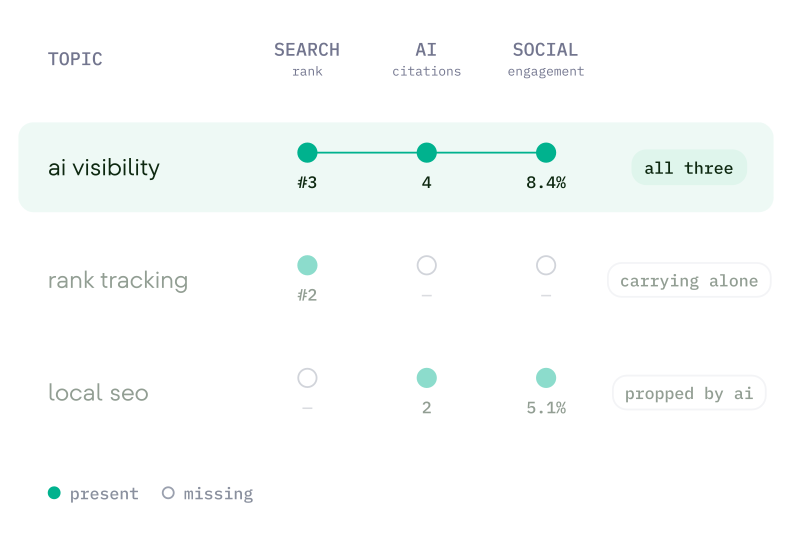
Topics where all three reads agree
When a topic ranks, earns citations in AI answers, and performs with your audience, that’s one presence reinforcing itself, not three separate results. These are the ones to build on.
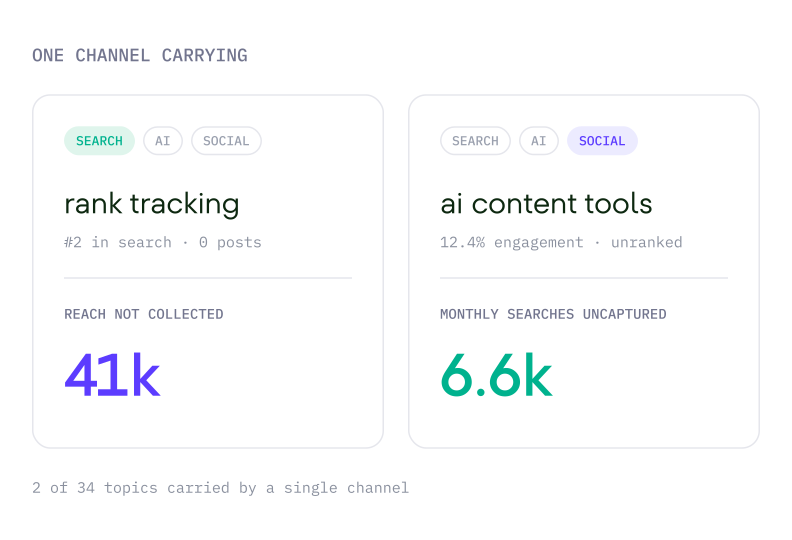
Topics only one channel is carrying
A topic you rank on with no social traction is reach you haven’t collected. A post outperforming everything on a topic with no search play behind it is interest your audience found first. Both are openings your plan doesn’t have yet.
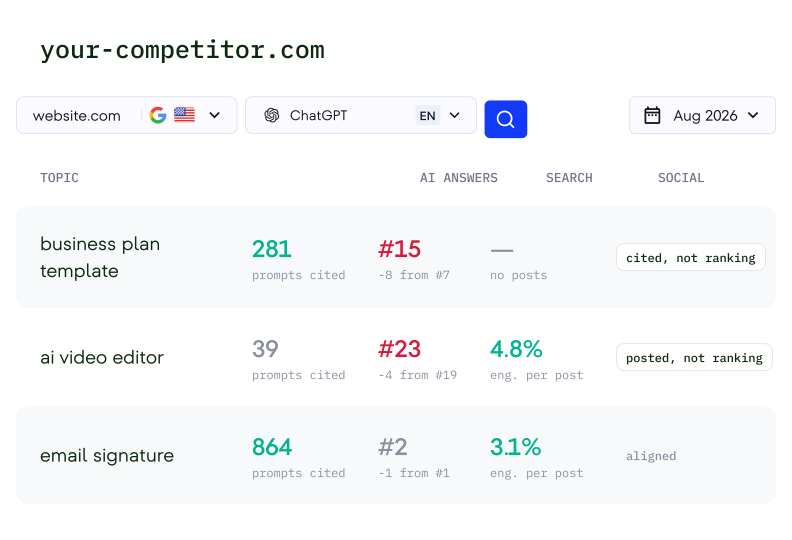
Where a competitor’s channels disagree
Line up a rival’s three reads, and the cracks show: cited across AI answers on a topic where their rankings are sliding, or well ahead on social with nothing behind it in search. Each one is specific enough to move on.
The gap between your channels is your next campaign
Find the correlations across search, AI answers, and social. Plan the next move based on the connected data.
No credit card required
See which topics your channels agree on — and which they don’t
Start a 14-day trial, connect both MCPs, and ask for the first read.
No credit card required
What changes once you plan from the connected read
Better content decisions, and three ways to tell whether they worked.
Every topic points back to a channel
Nothing lands on the plan by hunch. Each one is there because search flagged the demand, an AI answer cited you, or a post outperformed. And that reason stays attached to it.
You’re building on what already works
Every topic on the plan is already proving itself on at least one of the three reads. You’re scaling something with a record behind it.
Coverage across all three feeds itself
When a topic ranks, gets cited in AI answers, and performs on social, the three reinforce each other, compounding your visibility. Give it a few check cycles before that reads as a trend.
What marketers say about the SE Ranking and Planable MCPs



What do these two MCPs give the AI assistant?
Both let your AI assistant work with live data. The SE Ranking MCP gives search and AI-visibility data; the Planable MCP gives your channels, calendar and post performance. You ask in plain language and the assistant handles the queries against both.
Does this create posts?
No. This one is a read, not a run. It produces a picture of how your topics perform across the three channels, so you can decide what to act on. The workflows that end in drafted posts sitting in your Planable workspace are covered on separate pages.
What do I need on each side?
An SE Ranking subscription for the search and AI-visibility data. Bring GA4 and GSC in as a further layer for a fuller view. You also need a Planable workspace with at least one connected page and published history for the social side. Post performance comes from Planable Analytics, which is an add-on.
Which AI assistants can I connect the MCPs to?
Any assistant that supports MCP, Claude and ChatGPT among them. SE Ranking and Planable connect as two separate connectors, and you then prompt across both in one conversation.
What if one of the channels has no data yet?
Two channels still work. If social has no published history yet, you get the search × AI read and a note saying what’s missing. There are floors, though: below ~20 ranking keywords, ~10 AI prompts, or ~15 posts in the window, that channel is reported as insufficient data rather than absent — because “we don’t know” and “there’s nothing there” are different answers, and only one of them is an opportunity.
Are the three channels showing the same moment in time?
Not always, and the read tells you when they aren’t. Search and social cover the window you set. AI-answer data comes from SE Ranking’s own snapshot, which can be noticeably older, and it’s a sample of prompts rather than the full set, so an empty AI cell means “not in this sample”, not “you’re not cited”. Every report states each channel’s date at the top for exactly this reason.
What do I actually get back?
A short read in the chat, a written report, the full topic list as a spreadsheet, and an interactive HTML report you can send on as is. Plus an evidence folder naming which keywords, prompts and posts landed in each topic, so the matrix is auditable rather than something you have to take on faith.