Referral traffic from ChatGPT hit its all-time peak, jumping 36.7% in May 2026. Was it a one-month anomaly or a broader shift?
In May 2026, many SEOs, marketers, and website owners started noticing the same thing in their analytics: referral traffic from ChatGPT was rising.
At SE Ranking, we saw it too.
After May 5, visits from ChatGPT began to climb, with the biggest single-day jump appearing on May 13. According to Anastasia Kotsiubynska, our Head of SEO at SE Ranking, the homepage was the biggest driver of the increase.
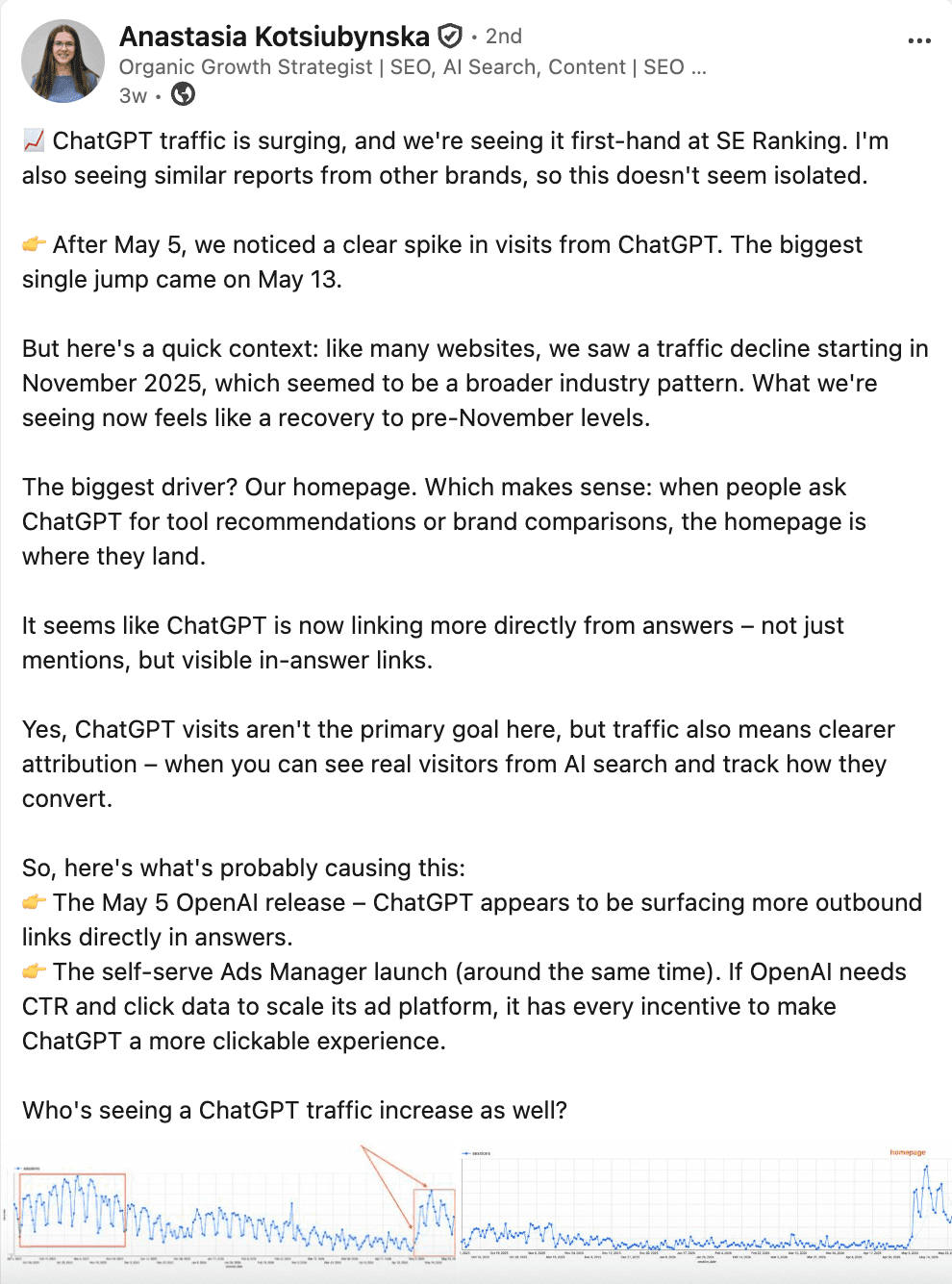
SE Ranking was not the only company seeing this pattern.
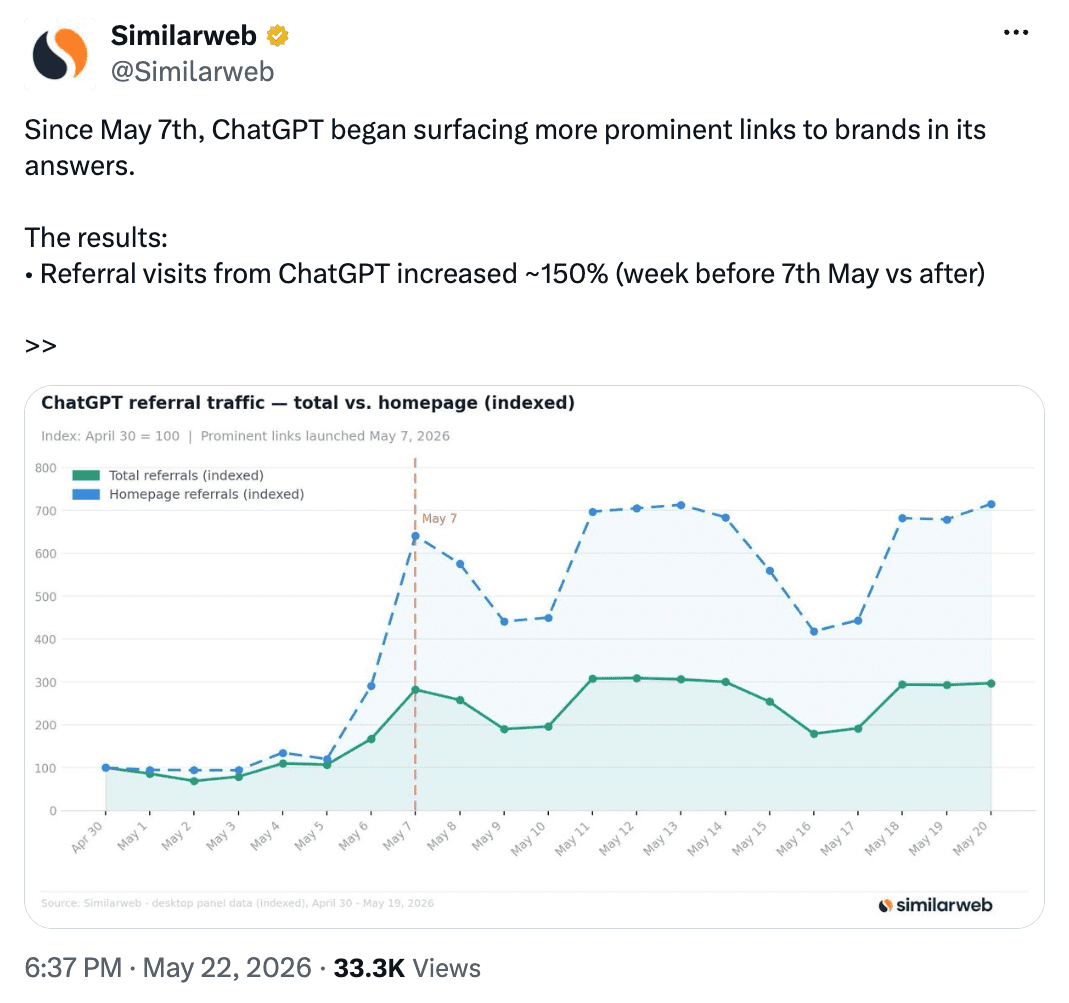
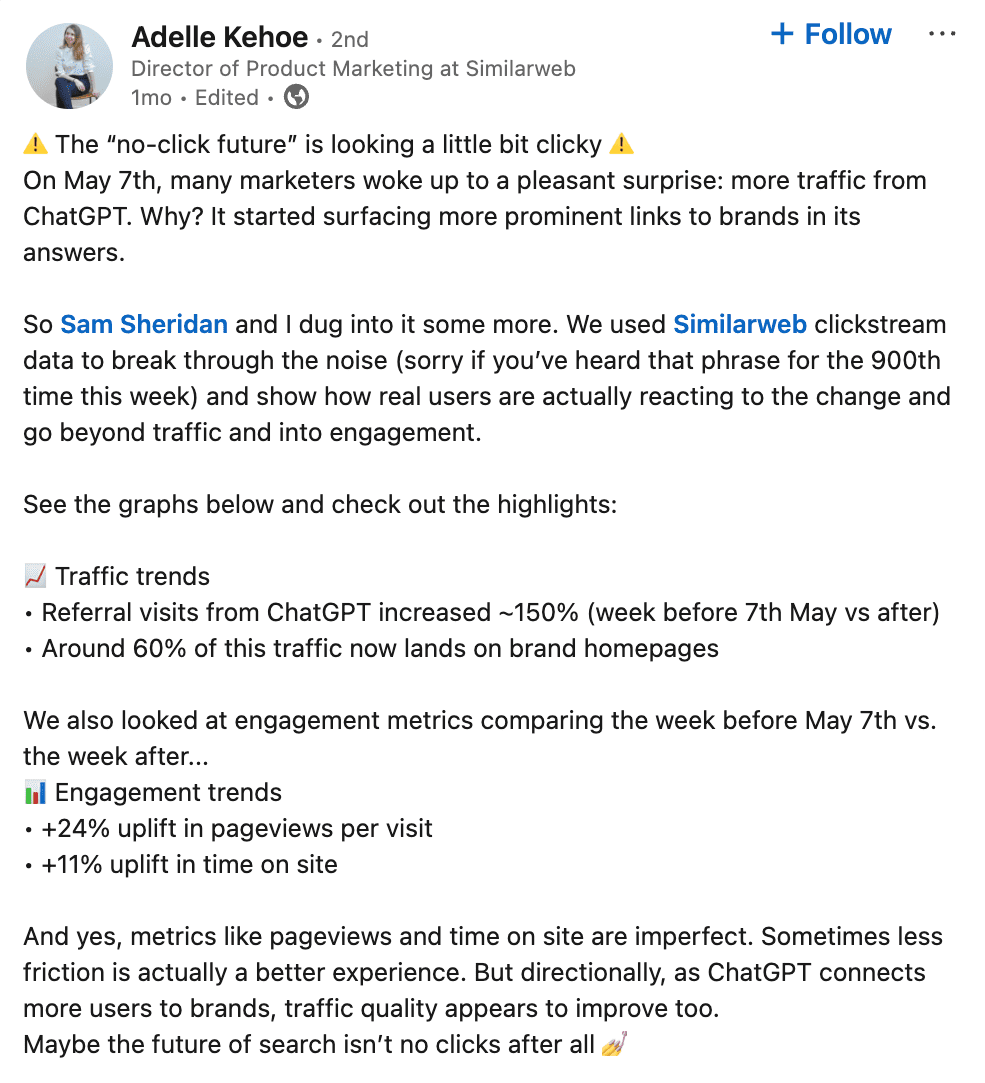
Similarweb reported a comparable shift. According to its analysis, ChatGPT began surfacing more prominent links to brands in its answers around May 7, and referral visits from ChatGPT increased by roughly 150% when comparing the week before May 7 with the period after.
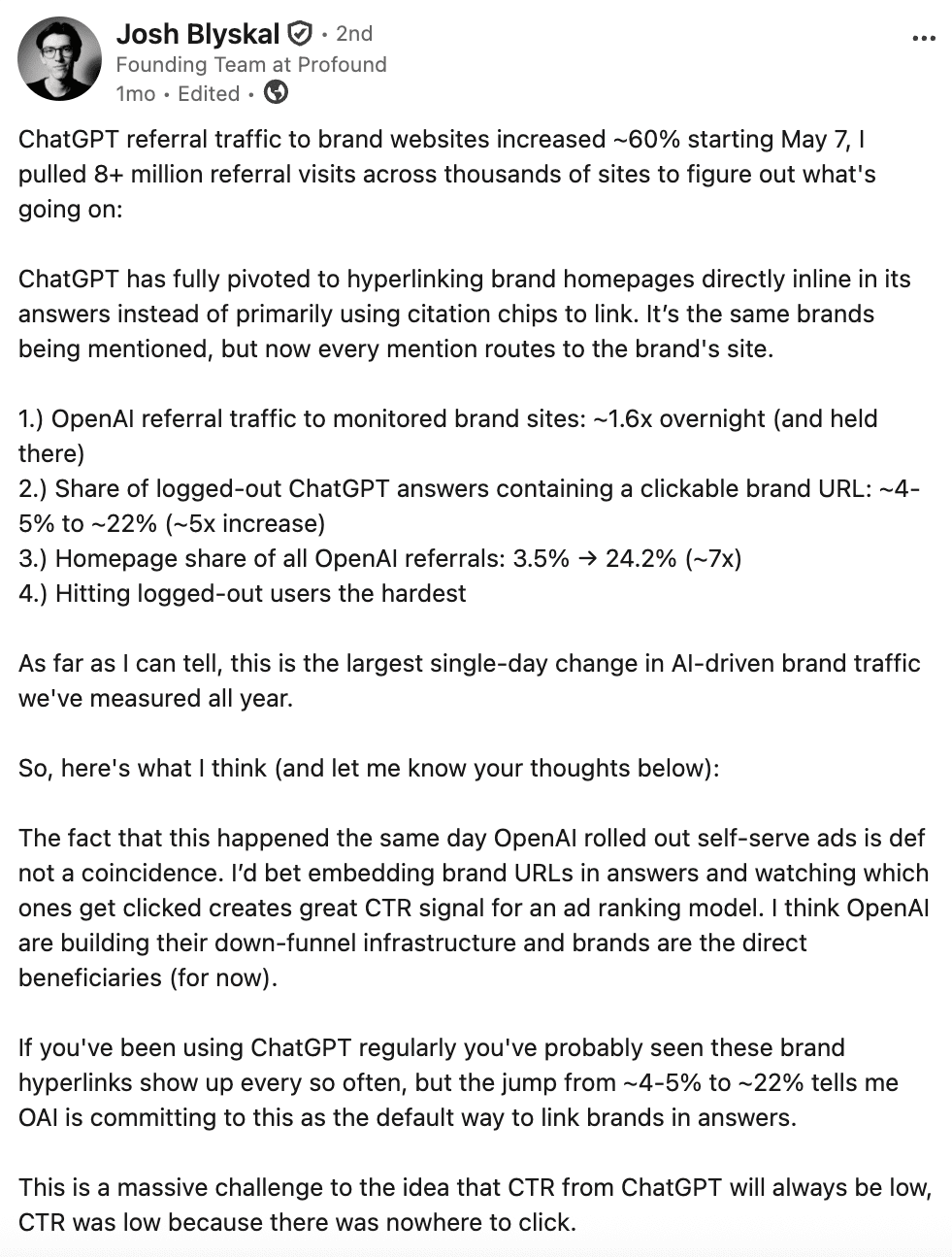
Josh Blyskal shared on LinkedIn that ChatGPT referral traffic to monitored brand websites increased by around 60% starting May 7. His analysis suggested that ChatGPT had started linking more directly to brand homepages inside answers.
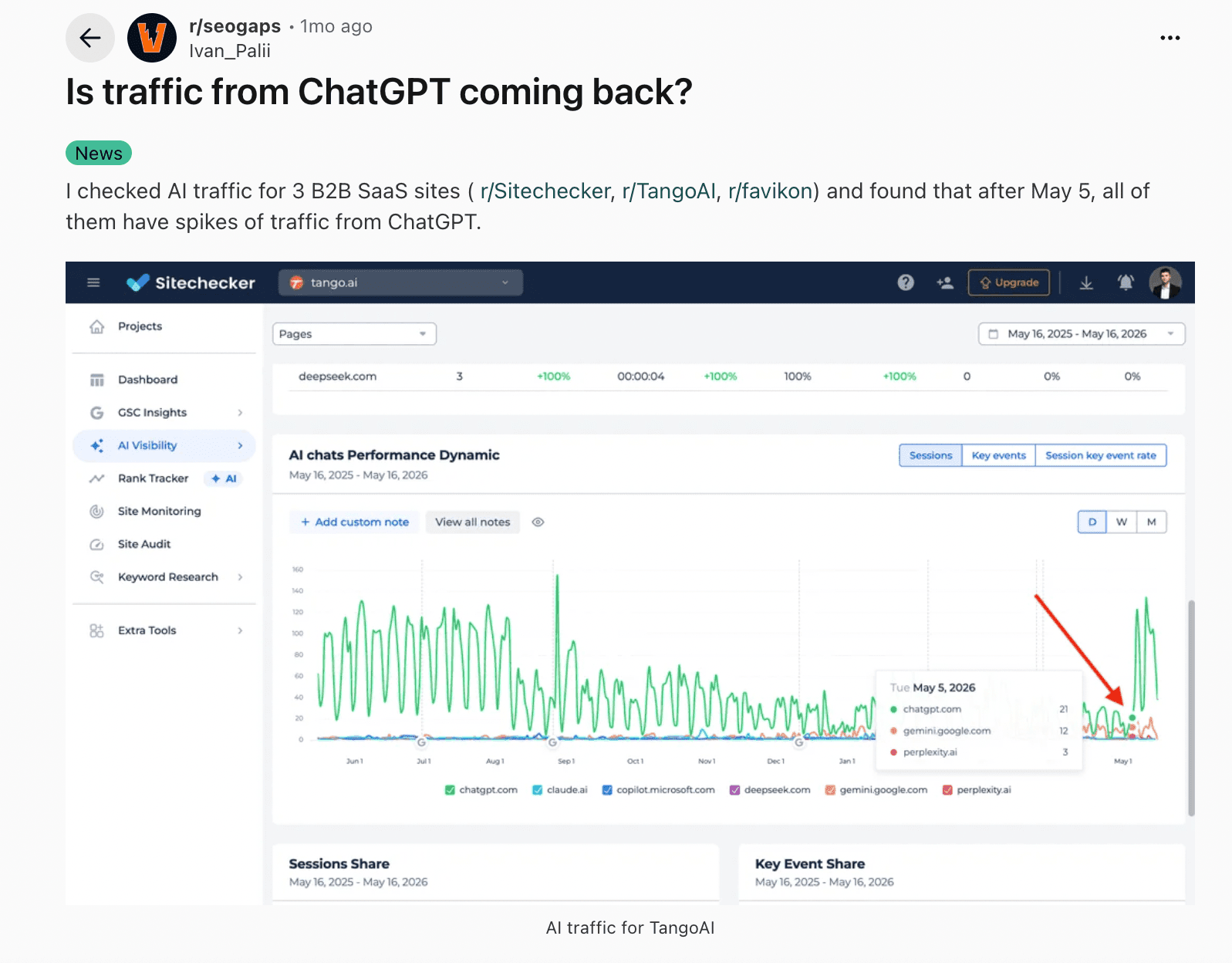
A recent Reddit discussion pointed to a similar pattern. The post described a spike in ChatGPT referral traffic beginning around May 5 across several three B2B SaaS sites and connected it to more visible brand links in ChatGPT answers.
These examples did not prove what caused the increase. But they did raise an important question: was this just a handful of websites seeing isolated spikes, or was there a broader traffic shift?
To answer that, we looked at traffic data from 101,574 websites across 250 countries and territories.
-
Referral traffic from ChatGPT reached its highest point in May 2026.
Worldwide, ChatGPT’s referral share rose from 0.23% in April to 0.32% in May, a 36.7% increase in just one month. That is 8.0% above its previous peak of 0.29% in October 2025.
-
The May increase appeared across every major region tracked.
Referral traffic from ChatGPT reached a monthly high in the US, UK, and EU. The biggest jump was in the EU at 42.7%, followed by the UK at 38.7% and the US at 23.2%.
-
The timing points to a possible ChatGPT product-level change.
On May 5, 2026, GPT-5.5 Instant became the default model for users, and OpenAI also launched beta self-serve Ads Manager tools around the same time. Together, these updates could help explain the rise in ChatGPT referrals.
-
The May increase was not a continuation of the previous 2026 trend, but rather a sudden acceleration.
From January to April 2026, ChatGPT’s worldwide referral share increased by only about 1.5% over four months. May alone produced a much larger increase than the entire January–April period combined.
-
The AI referral market is still expanding beyond ChatGPT.
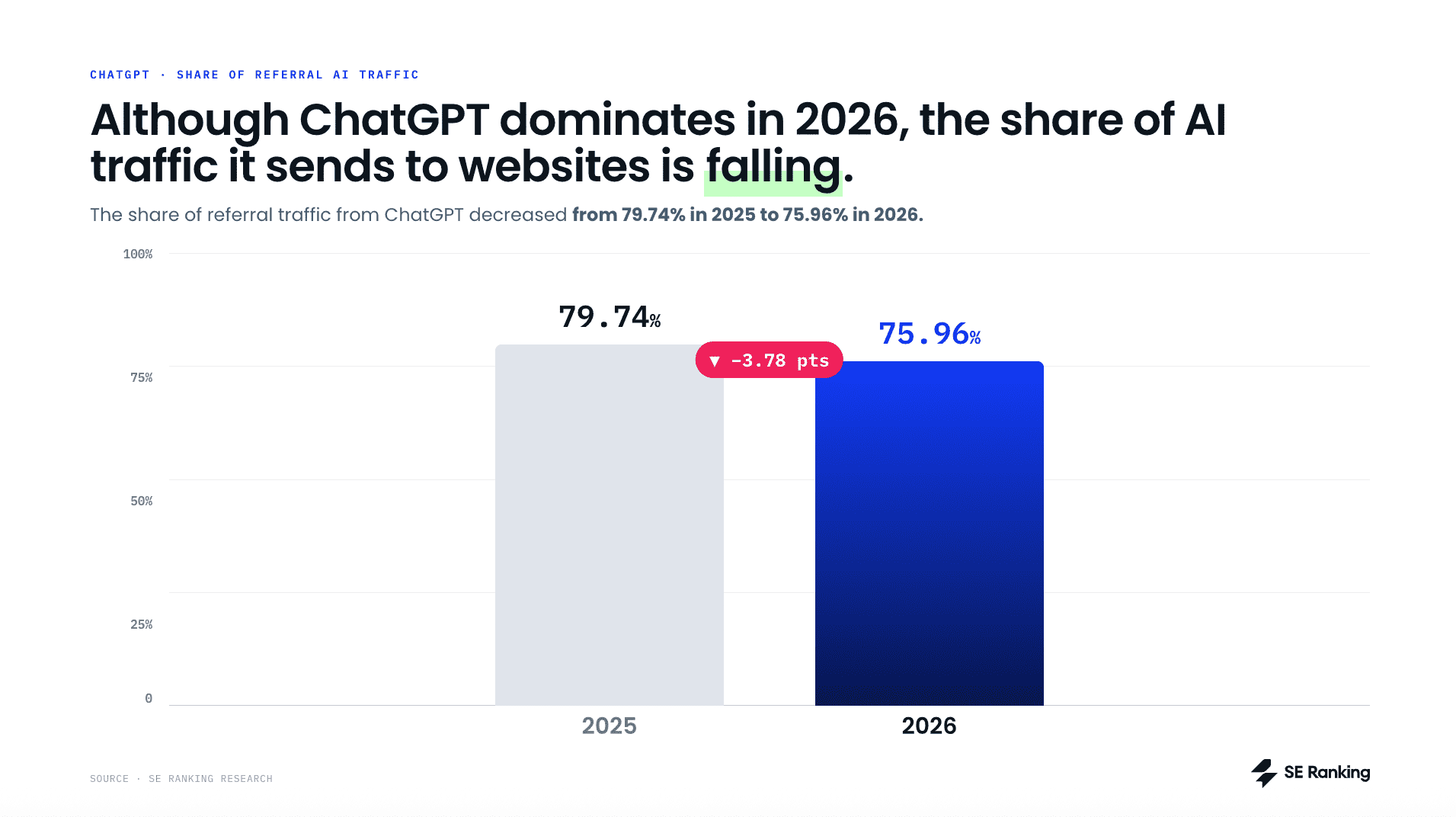
Worldwide, ChatGPT’s share of all AI referral traffic fell from 79.74% in 2025 to 75.96% in 2026. For SEO teams, this means ChatGPT should be tracked separately, but not in isolation from Gemini, Perplexity, Copilot, Claude, and other AI platforms.
Global traffic from ChatGPT hits its all-time peak in May 2026
Worldwide, the share of referral traffic from ChatGPT to websites rose from 0.23% in April 2026 to 0.32% in May 2026.
At first glance, both numbers may look small because AI referral traffic still makes up only a tiny portion of total website traffic. But the month-over-month change is what matters here: ChatGPT’s worldwide referral share increased by 36.7% in a single month.
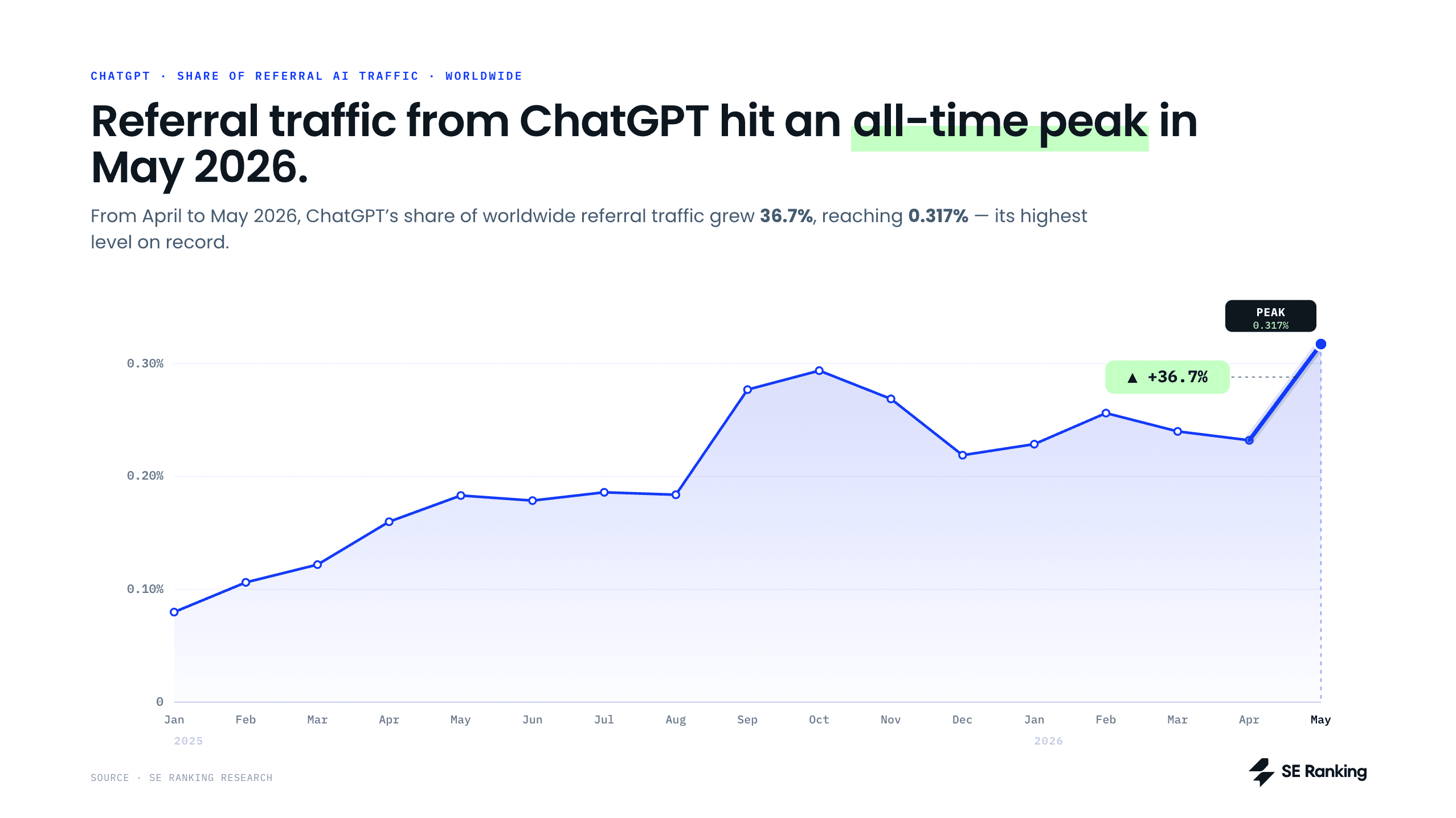
That is a major shift for a channel that had been almost flat earlier in the year.
The thing is, from January to April 2026, ChatGPT’s worldwide referral share moved from 0.2286% to 0.2321%. That is only about 1.5% growth over four full months. Then May alone produced a much larger move than the entire January–April period combined.
Its previous high was 0.29% in October 2025, which means May was about 8.0% above the earlier peak.
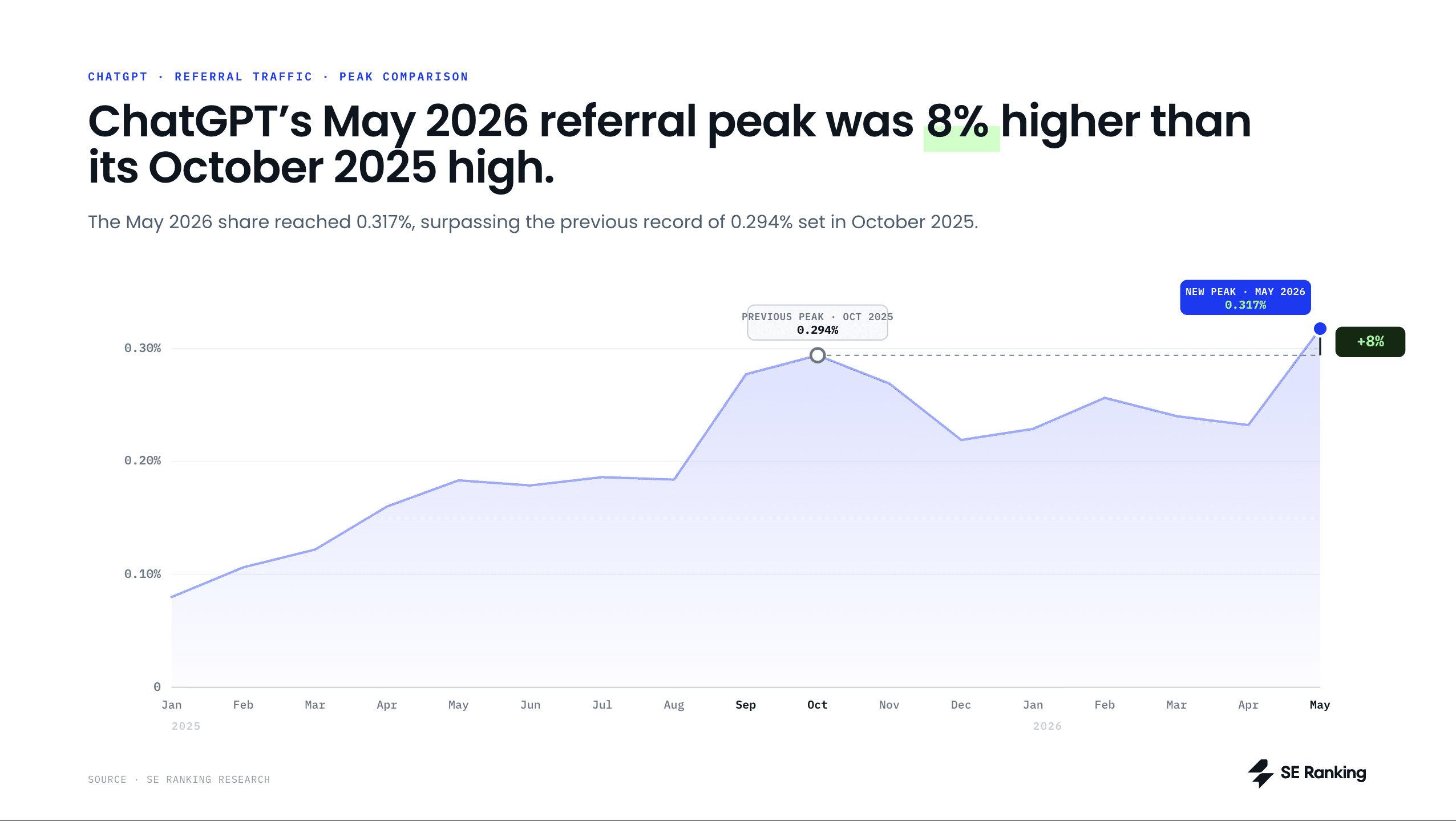
In other words, May was not simply a continuation of the previous trend. It was a clear step change. After several months of limited movement, ChatGPT referral traffic reached a new all-time high and moved well above its previous October 2025 peak. The absolute share remains small, but the sudden acceleration suggests that something changed in how often ChatGPT sends users to websites.
Regional breakdown in the US, the UK, and the EU
May 2026 was also the highest monthly ChatGPT referral share in every region we tracked: the US, the UK, and the EU.
The size of the increase varied by region. The EU saw the largest month-over-month jump, with ChatGPT referral share rising by 42.7%. The UK followed with a 38.7% increase, while the US average rose by 23.2%.
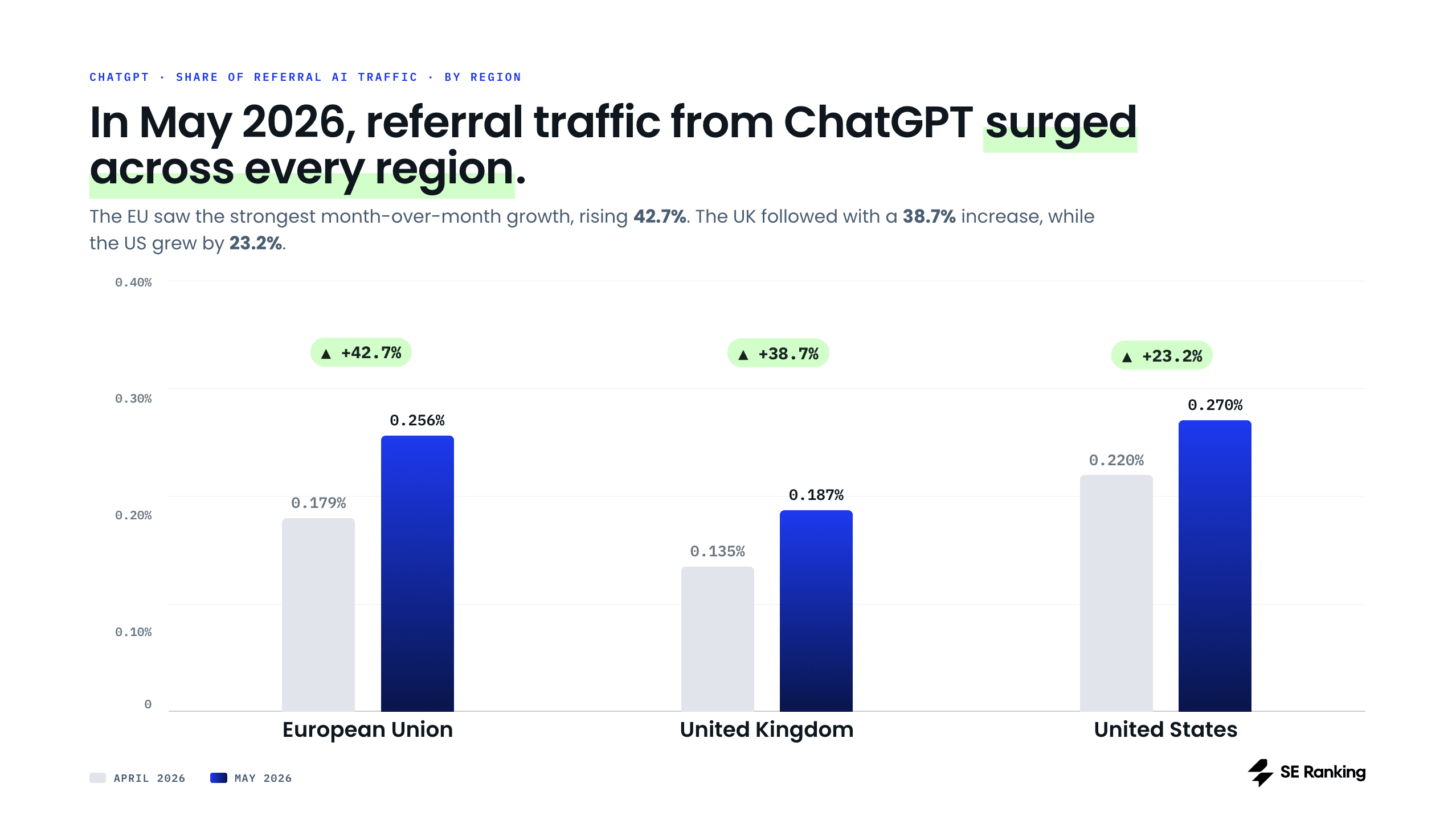
But the important part is not only that ChatGPT referral traffic increased. It is that different regions were moving in different directions before May, and then all turned upward in the same month.
- From January to April 2026, the US was already moving upward. ChatGPT’s referral share rose from 0.1771% to 0.2196%, an increase of about 24%.
- The UK was slightly down over the same period, slipping from 0.1379% in January to 0.1350% in April.
- The EU showed the sharpest decline. ChatGPT’s referral share fell from 0.2181% in January to 0.1795% in April, a drop of about 18%.
So, before May, there was no single regional pattern. The US was climbing, the UK was slightly declining, and the EU was falling more sharply. Then, in May, all three regions turned upward in the same calendar month.
That kind of synchronized shift across regions with different prior trends is one of the strongest signals that the May increase was not just normal month-to-month volatility, but part of a broader change in ChatGPT-driven referrals.
What likely changed in May 2026
The May increase in referral traffic from ChatGPT may point to a possible product-level change in how ChatGPT sends users to websites.
The strongest explanation is the May 7 link-format change. Around that date, ChatGPT appears to have started making brand names more clickable directly inside answers. That is a meaningful UX change. Before, a brand mention in an AI answer mostly created awareness. After the change, the brand name itself became a direct path to the company’s website.
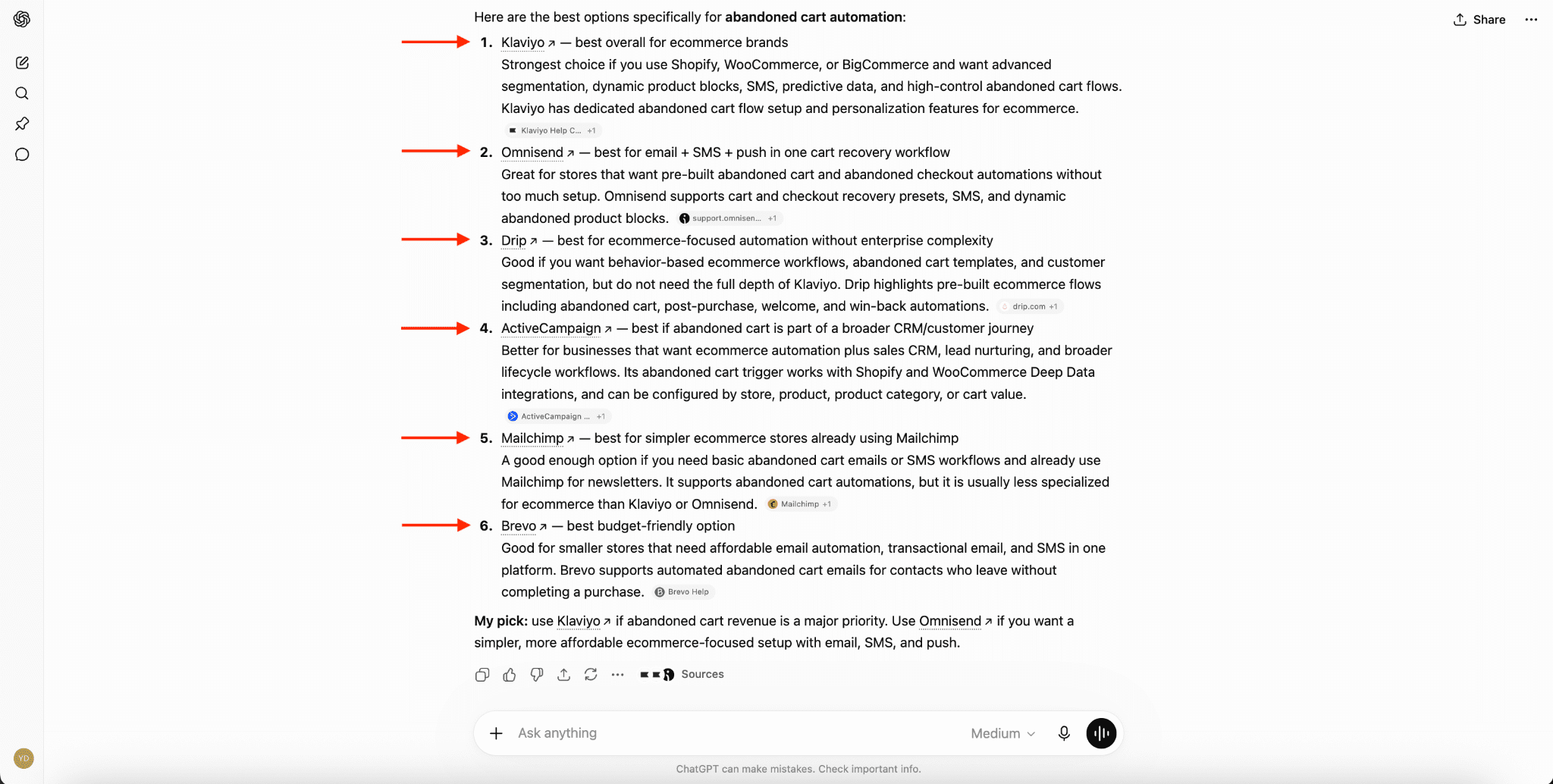
The increase was sudden, synchronized across the US, UK, and EU, and disproportionately benefited homepages. In other words, ChatGPT did not simply send more users to the same kinds of pages. It seems to have made brand discovery more clickable.
Public discussion among SEOs and marketers points in the same direction. For example, a post on LinkedIn from Adelle Kehoe highlighted this saying that ChatGPT “started surfacing more prominent links to brands in its answers.”
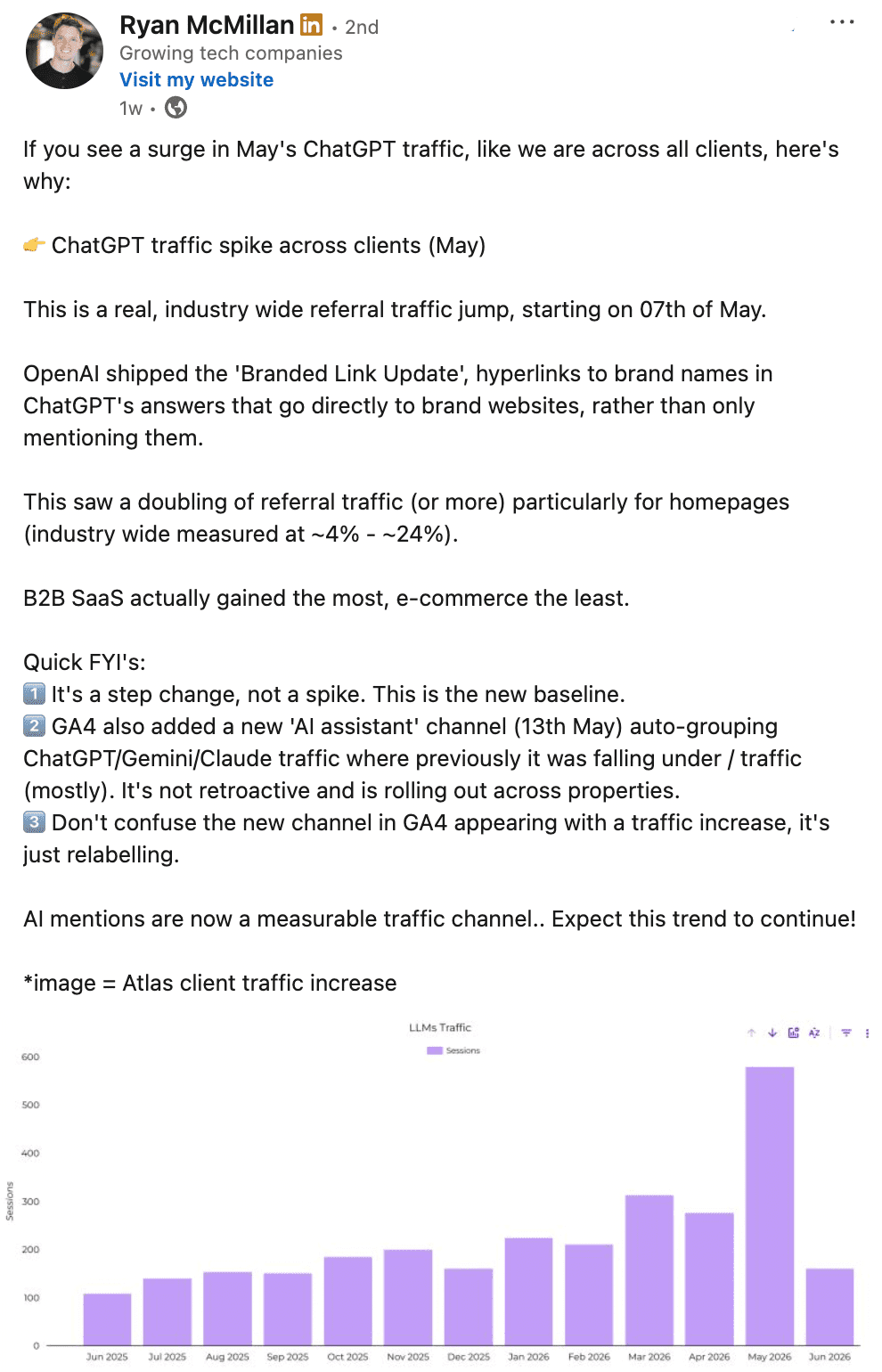
Ryan McMillan, in turn, reported on LinkedIn that ChatGPT referral traffic rose across clients starting on May 7, attributing the shift to a “Branded Link Update” that made brand names in ChatGPT answers clickable and drove more users directly to company websites.
The May 5 release of GPT-5.5 Instant likely formed part of the broader context. OpenAI made GPT-5.5 Instant the default ChatGPT model for all users, replacing GPT-5.3 Instant and improving everyday answers, factual reliability, concision, and decisions about when to search the web. A model-level rollout of that scale can change how often ChatGPT searches, which sources it selects, and how confidently it recommends brands.
The ads rollout makes the May traffic spike even more interesting.
The thing is, on May 5, OpenAI expanded its ChatGPT advertising infrastructure with self-serve Ads Manager. Two days later, ChatGPT referral traffic rose sharply, with the biggest gains going to brand homepages. That sequence is unlikely a coincidence since inline brand links do more than send traffic. They also create a new layer of behavioral data: which brands users click, in which conversational contexts, after which types of recommendations.
That kind of signal is valuable for any ads marketplace. If ChatGPT can observe that users click certain brands after specific prompts, comparisons, or recommendation journeys, it can start to understand which recommendations produce commercial intent. Even if organic links are not officially described as ad-training data, they can still produce useful feedback for future ad ranking, targeting, measurement, and pricing.
This does not mean OpenAI added inline links only because of ads. The change also improves user experience: when ChatGPT recommends a brand, users naturally expect to click through. But the commercial upside is obvious. A more clickable ChatGPT creates more attributable traffic, more measurable user behavior, and a stronger foundation for performance-based advertising.
ChatGPT is still number one, but the AI referral market is expanding
The May jump does not mean ChatGPT is gaining share within the AI referral category overall.
In fact, ChatGPT’s share of all AI referral traffic declined year over year in most regions we tracked.
Worldwide, ChatGPT accounted for 79.74% of AI referral traffic in 2025. In 2026, that share was 75.96%.
- In the EU, ChatGPT’s share fell from 83.03% to 76.77%.
- In the US, it fell from 75.78% to 72.41%.
- The UK was almost unchanged, moving from 86.88% to 86.27%.
This may look contradictory at first, but it is not. ChatGPT can send more referral traffic while also losing share within the AI category if other AI platforms are growing too.
That is what the data suggests. ChatGPT’s own traffic increased, especially in May, but the broader AI referral market also expanded. Gemini, Claude, Microsoft Copilot, DeepSeek, Grok, Poe, Mistral AI, and smaller AI tools are all part of the growing referral ecosystem.
ChatGPT remains the clear leader by AI traffic share. Given how far ahead it still sits, that is unlikely to change quickly. But the category is no longer only a ChatGPT story.
For SEO teams, this means AI referral analysis should not stop at ChatGPT. ChatGPT should be tracked separately because of its scale, but the wider AI search ecosystem also needs attention.
What this means for SEO teams
The May 2026 data does not mean SEO teams need to rethink their entire strategy. But it does change how AI referral traffic should be measured and managed.
First, keep in mind that brand visibility in ChatGPT now has a clearer traffic impact.
Before May, being mentioned in a ChatGPT answer often created awareness, but not always a website visit. If the brand name appeared without a link, users had to open a new tab and search for the company themselves. Many would not take that extra step.
After May, more ChatGPT mentions appear to be turning into actual referral sessions. This means AI visibility is beginning to extend beyond brand awareness and may already be playing a role in measurable acquisition.
Second, pay closer attention to where ChatGPT traffic lands.
In SE Ranking’s own data, the homepage was the biggest driver of inbound ChatGPT traffic. This makes sense: when users ask ChatGPT for tool recommendations, brand comparisons, or software alternatives, the most natural destination is often the company homepage.
Our broader research supports this pattern. We found that 60% of AI-referred traffic lands on homepages, compared to just 17% from organic search. That makes homepage traffic nearly 4x higher from AI than from traditional SEO.
This suggests that AI search engines are not always sending users to the most specific article, guide, or product page. In many cases, they are directing users toward the brand itself.
That creates a new challenge. Many homepages are built for visitors who already know what they want. But someone arriving from a ChatGPT recommendation may still be exploring options. They may need clearer positioning, faster proof of value, stronger comparison messaging, and easier next steps before they are ready to convert.
Third, connect AI referral changes with the broader signals behind them.
An increase in AI referral traffic from ChatGPT may suggest that the brand is also becoming more visible in AI answers. And to put that traffic growth into context, it’s important to analyze it alongside brand visibility metrics that act as proxies for AEO performance.
This is where SE Ranking’s AI Results Tracker can add context. Using it, you can identify whether your brand appears in AI answers for target prompts, how often it appears in prominent positions, which competitors appear alongside it, and how AI visibility changes over time.
One especially useful brand visibility metric that SE Ranking shows is top 3 placement. Basically, it shows how often the brand appears among the first mentions in AI answers, which is a way a stronger signal of AEO performance than presence alone.
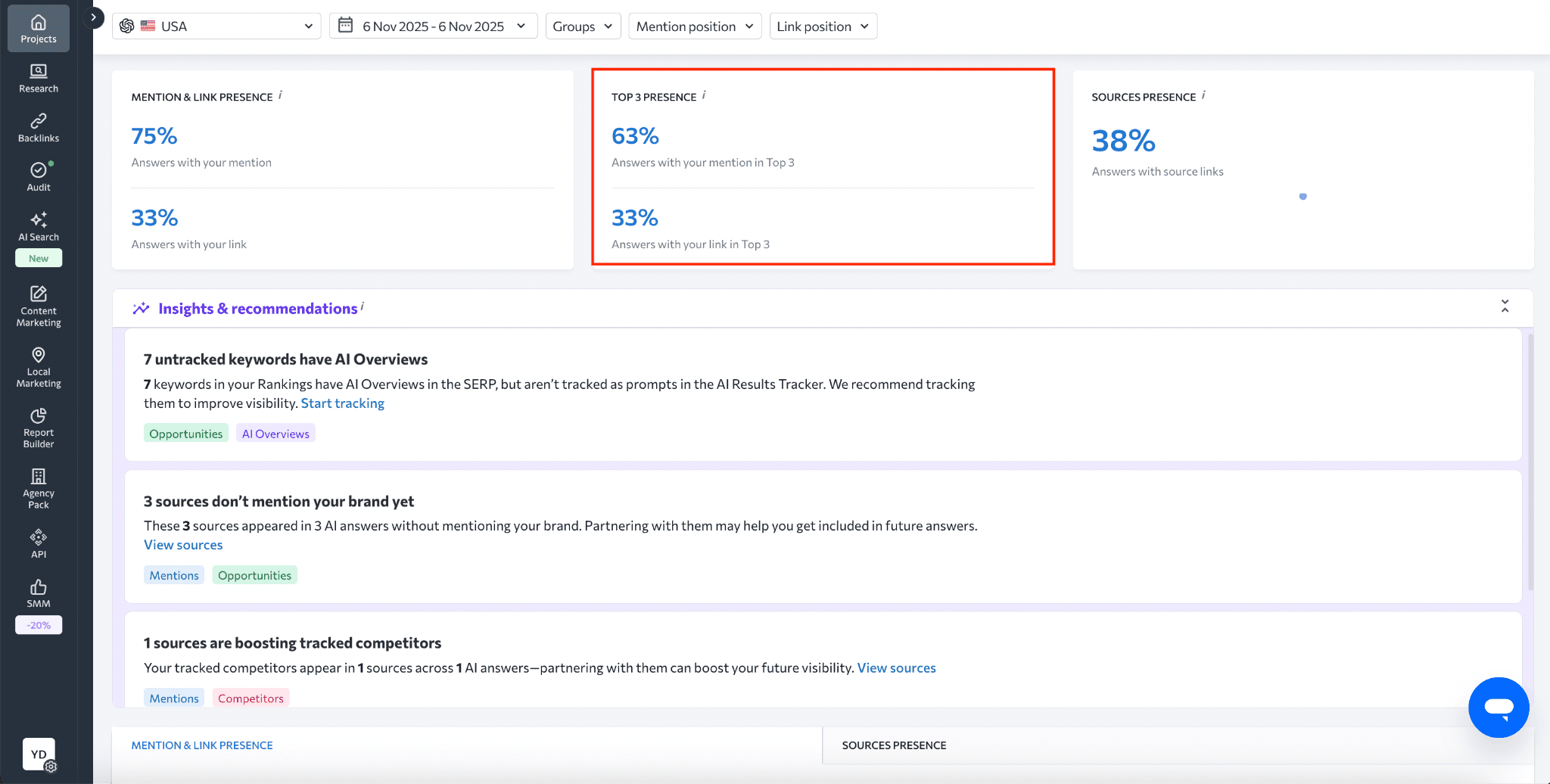
You can also use the Sources feature in AI Results Tracker to see which pages, domains, and content types AI search engines rely on when generating answers. This helps identify what content is already working and which pages should you create, update, or strengthen to improve the chances of being cited by ChatGPT.
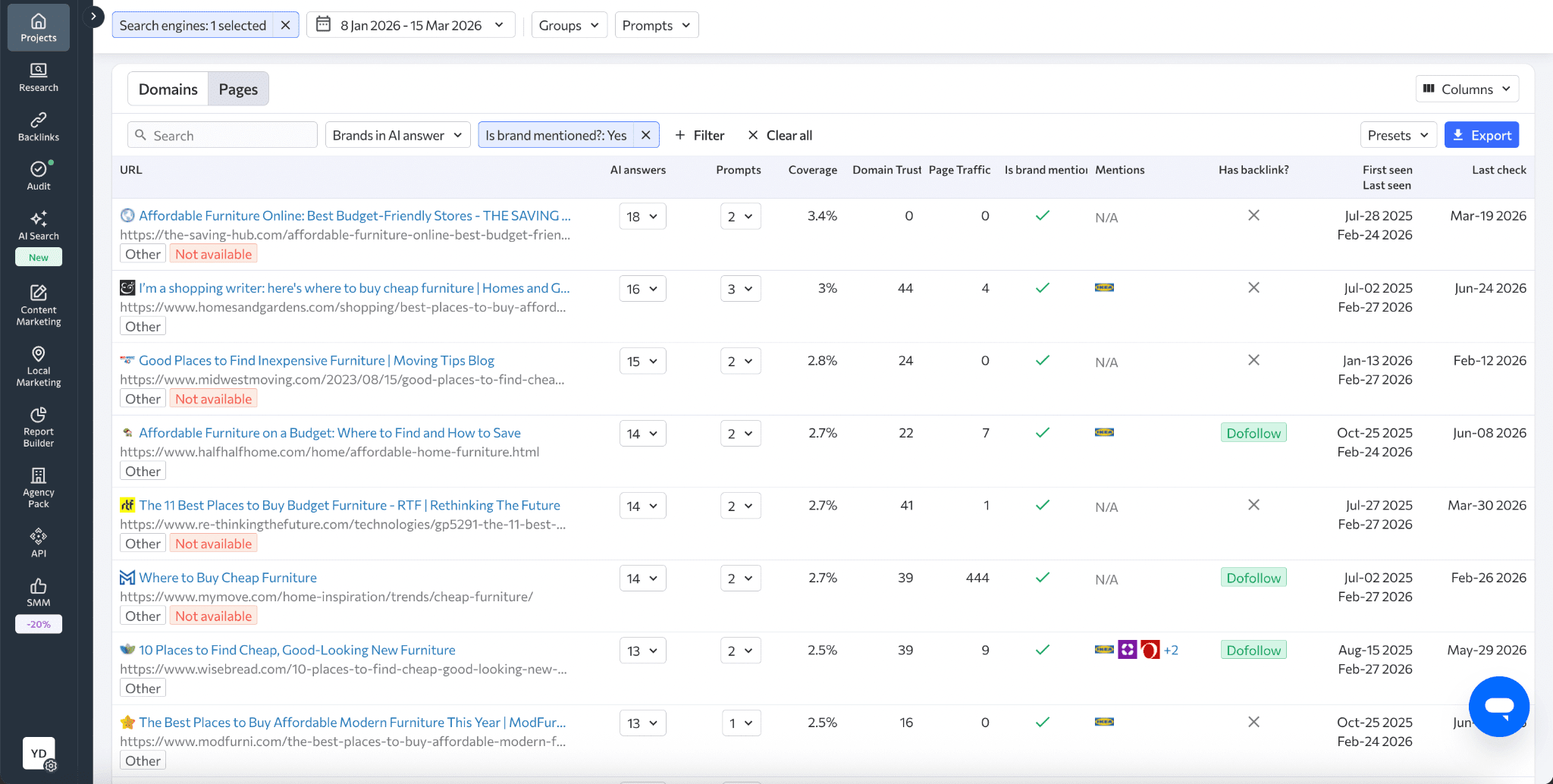
Those findings can feed straight into the content plan: which topics to prioritize, and in what format, based on the sources AI systems already rely on.
The tasks described above can also be done through SE Ranking’s MCP. It connects SE Ranking’s SEO and AI search data to AI assistants like Claude, ChatGPT, Cursor, etc., so you can investigate brand visibility patterns through prompts.
Beyond that, you can use SE Ranking MCP for deeper competitor analysis. For example, you can pull AI search visibility data for two or three direct competitors to compare which brands appear together most often, in which query categories, and whether those patterns shifted in May.
That tells you whether you gained ground relative to competitors or whether the whole category rose together.
The goal across all these workflows is the same: not just to see that AI referral traffic changed, but to understand which pages and query types benefited, where competitors stand in the same discovery journey, and what the team should improve before the next platform-level change arrives.
Research methodology
This study analyzes referral traffic from ChatGPT to websites. It is based on aggregated, anonymized data from 101,574 websites across 250 countries and territories.
The data comes from websites with Google Analytics integrated in compliance with SE Ranking’s Terms of Service. We tracked how much website referral traffic was attributed to ChatGPT and measured how that share changed over time.
The analysis covers 17 months of continuous tracking, from January 2025 through May 2026.
- 2025 is used as the baseline year. It includes a full 12 months of data, giving us a stable view of AI referral traffic patterns.
- 2026 represents the current period. The data covers January through May 2026 and is compared against the 2025 baseline to show what is changing now.
Regional breakdowns cover worldwide, the US, the UK, and the EU.
Disclaimer: The results show patterns in this specific dataset and may not reflect ChatGPT referral traffic trends for every website, industry, region, or audience. Individual results can vary depending on market, content type, brand visibility, analytics setup, and how ChatGPT surfaces, links to, or attributes website referrals.
The potential connection between the May 5 OpenAI release and the self-serve Ads Manager launch with the May traffic increase is a working hypothesis, not a proven causal relationship.
Conclusion
May 2026 looks like a potentially meaningful turning point for referral traffic from ChatGPT, but we cannot say for sure yet whether it was a one-month anomaly or the beginning of a broader shift.
The 36.7% jump was not limited to one market or a small group of websites. It appeared worldwide, showed up across every region we tracked, and happened at the same time in markets that had been following different trends earlier in the year. That makes the May increase look less like normal traffic noise and more like a possible channel-level shift.
At the same time, we need to keep tracking the following months before drawing a firm conclusion. The spike seems likely connected to the two major product-related updates like GPT-5.5 Instant becoming the default model for users, and OpenAI launching beta self-serve Ads Manager tools.
For now, the safest conclusion is that AI referral traffic, particularly from ChatGPT, should be watched closely as an emerging traffic channel alongside organic search, paid search, direct, and other sources. If the trend continues beyond May, it would strengthen the case that ChatGPT referrals are becoming a more consistent and strategic part of the traffic mix.