
Keyword Volume Checker. Demand data that holds up in client forecasts.
Check exact monthly search volumes and use this data to prioritize keywords and forecast results across the sites you manage.
Trusted by 40,000+ agencies
From a single volume check to automated client research
SE Ranking MCP gives your AI assistant live access to keyword volume, CPC, difficulty, and trend data, so you can research hundreds of keywords for each client and market in one prompt instead of rerunning manual checks.
Included in SE Ranking subscriptions. Runs on your plan’s API credits.

Why use SE Ranking’s keyword volume tool?
Search Volume Checker by SE Ranking is free and provides accurate data on monthly organic searches for individual keywords.
This helps you determine term popularity and target the right queries for your content.
To help you craft a sound keyword strategy, SE Ranking uses powerful algorithms that calculate separate search volumes for similar terms. It also updates data regularly.
Volume checks are the start. Client strategy is what comes next.
A single number answers “is anyone searching?” Agencies need to answer “is this worth a client’s budget?”
Check volumes in bulk
Paste or import a full keyword list instead of checking terms one by one, and get separate volumes for close variants so plural and singular forms aren’t lumped together.
Prioritize with more than volume
Pull difficulty, CPC, intent, and 12-month trend next to volume to tell which keywords are worth targeting for each client.
Track what you sized
Move the keywords you prioritize into Rank Tracker and keep watching them, so the forecast you pitched turns into results you can report on.
The biggest Database in the US
 USA 144M
 Canada 46M
 Germany 64M
 United Kingdom 106M
 UAE 18M
 Japan 21M
What is search volume?
Search volume is the number of times a keyword or phrase is searched for within a set timeframe, typically a month. It shows how popular the keyword is by revealing how often users search it and helps you choose keywords that can attract more visitors to your site.
High search volume keywords have stronger demand but their broad and competitive nature makes them difficult to target. Low search volume keywords, which are more narrow and niche-specific, are less frequently searched and less competitive but easier to target due to their more frequently defined intent. The best approach is to check search volume and balance your use of both keyword types.

Search volume measures demand in Google. Prompt research measures it in AI answers.
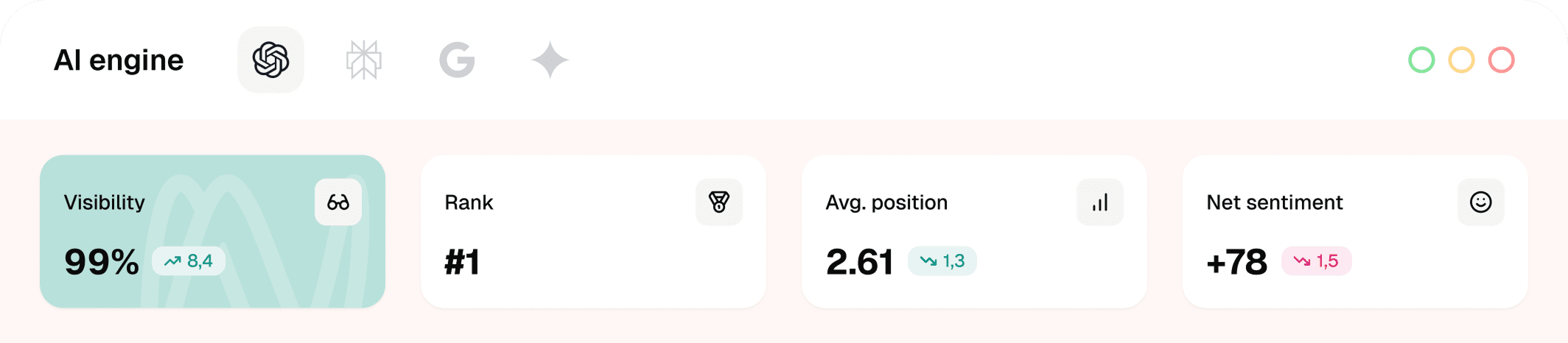
More of your clients’ audience asks AI assistants first, and those questions don’t show up in keyword volume. SE Visible breaks AI visibility down to the prompts behind it: which questions mention a brand, who gets named instead, and which prompts carry buying intent.
How to check keyword search volume?
Many tools on the market provide search volume data, Google Keyword Planner being one among them. Although initially built for advertising, Google Keyword Planner’s grouped search volume data is reliable because it comes straight from the source. SE Ranking’s Keyword Search Volume Tool is a helpful free alternative designed specifically for SEO. Just enter your query to see keyword monthly search volume data and separate values for similar terms.
How do I track branded search volume?
Tracking search volume for keywords related to your brand helps you measure your business visibility and find growth opportunities. You can use SE Ranking to collect this data. Add your branded keywords, like “BrandName,” “BrandName services,” “Buy BrandName products” etc., into our Search Volume Checker to get accurate numbers for each term.
How do I know the search volume on Google?
Although you can use Google Keyword Planner, you’ll get search volume ranges like 100-1K, 10K-100K, etc. SE Ranking, on the other hand, provides exact numbers for each Google search query. The more accurate your search volume check is, the more effective your SEO forecasts will be, leading to better performance.
What is the difference between search volume and search traffic?
Search volume and search traffic are two distinct SEO metrics. The former refers to the number of times a keyword is searched over a given time. The latter refers to the visits (clicks) a website gets for a particular keyword (or overall). Search volume represents potential interest, while search traffic represents the outcome of ranking for a keyword. Use our free Website Traffic Checker to get started.
How do I increase search volume?
You can’t increase search volume without influencing how people think, behave, or search. One method is to create demand for your brand, services, or products. For example, if you launch a new product category that users might not be searching for yet, creating content around it can spark interest. But it requires time. To drive more traffic to your website, pair these efforts with finding and targeting more keywords, focusing on higher search volume queries.
How do I use search volume data in client reporting?
Search volume estimates are most useful in client reporting when they’re treated as directional signals rather than precise figures — framing keyword prioritisation decisions, supporting content or campaign recommendations, and tracking shifts in demand over time.
Operationally, how you integrate volume data depends on your reporting infrastructure. SE Ranking’s keyword research API lets you pull volume, CPC, difficulty, and trend data directly into custom dashboards or automated reporting pipelines. For teams using AI-assisted workflows, the SE Ranking MCP server gives AI agents live access to the same data — so volume figures feed into research and reporting without a manual export step in between.
Is there search volume for AI prompts?
Not in the same way. AI assistants don’t publish query volumes, so prompt research measures visibility instead: which prompts mention a brand, how often, and who gets named alongside it. SE Visible tracks this across ChatGPT, Gemini, AI Mode, and AI Overviews, which pairs well with keyword volume when you plan content for both search and AI.