Long-Tail Keyword Generator
Identify high-intent long-tail terms your audience actually searches for and use them to boost visibility and ROI
Trusted by 40,000+ agencies
What are long-tail keywords in SEO?
In SEO, long-tail keywords are longer and more specific search phrases, usually three or more words, that reflect clear user intent. For example, “best SEO reporting tools for agencies” instead of just “SEO tools” or “affordable hotels in central Paris” instead of “hotels in Paris.” These keywords tend to have lower search volume but higher relevance and conversion potential because they attract users who know exactly what they’re looking for. By targeting long-tail keywords, websites can reach niche audiences, face less competition, and improve their chances of ranking higher in search results.
How to find long-tail keywords
Enter a broad seed keyword in the search bar on the Long-Tail Keyword tool page.
Select your target country and click Generate.
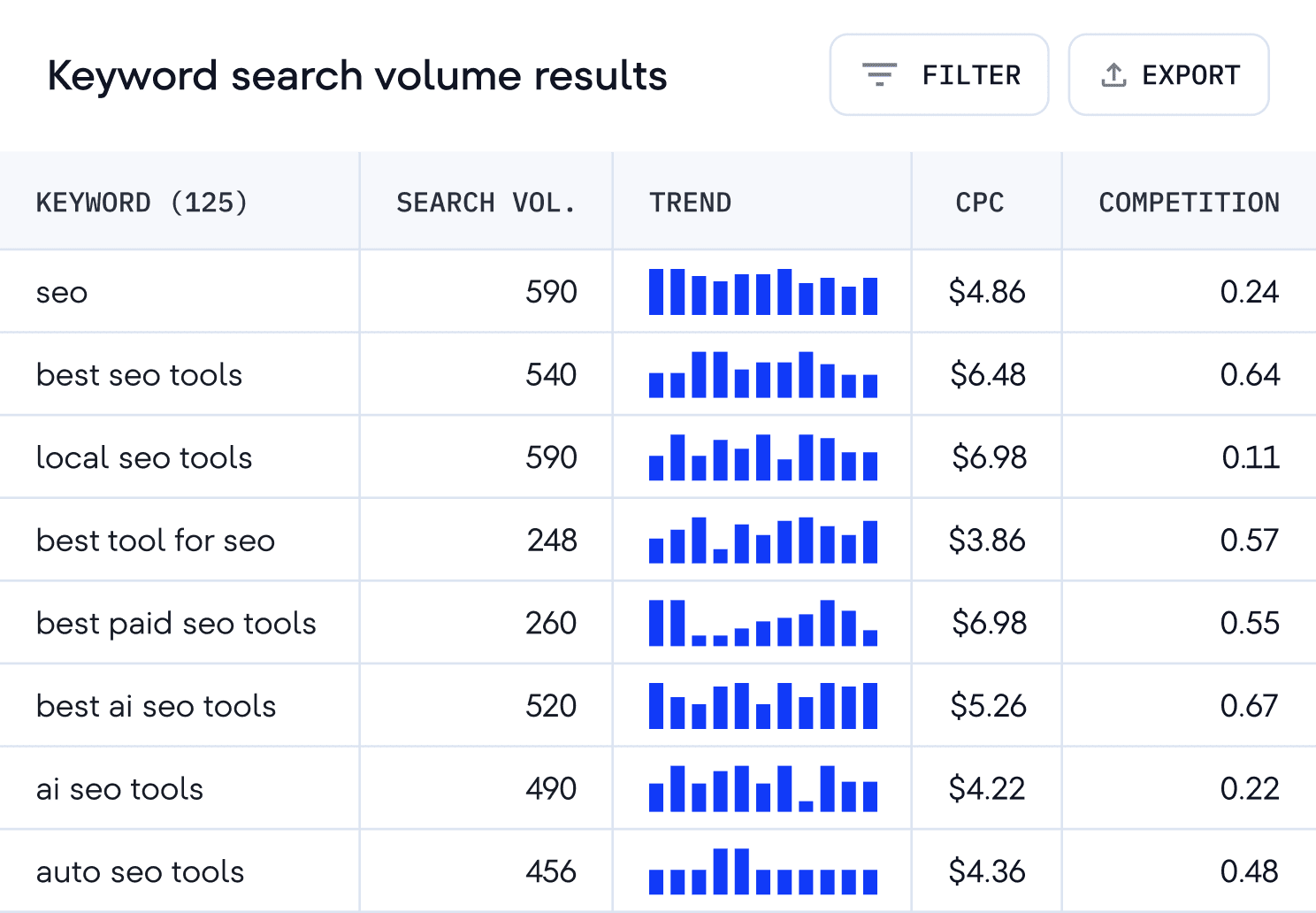
Explore the similar, related, question-based, and low search volume keyword suggestions in the results.
Use filters to set a minimum word count (3–5 words) and uncover longer, more specific keyword phrases.
The biggest keyword database in the US
- Americas428M
-

 USA 144M
 -
 Canada 46M
-
- Europe1.1B
-
 Germany 64M
 -
 United Kingdom 106M
-
- Asia453M
-
 UAE 18M
 -
 Japan 21M
-
Find thousands of keywords that bring you conversions
Identify high-intent phrases and grow your organic traffic. Start your 14-day free trial with SE Ranking today.
How do you identify long-tail keywords?
The easiest way to find long-tail keywords is by using dedicated long-tail keyword generators like SE Ranking’s. Our tool provides comprehensive data on keyword ideas, search volume, competition, and intent. Simply enter a seed keyword, and the tool will generate a wide range of long-tail terms.
For additional ideas, use Google features like Autocomplete, People Also Ask, and Searches Related To, all of which reveal real user queries. Tools such as Google Trends, Google Keyword Planner, and Bing Webmaster Tools can also help identify trending or question-based long-tail phrases.
Finally, explore forums, Quora, Reddit, and even your customer conversations or social media posts to capture the exact words people use when discussing your niche.
How do you choose long-tail keywords?
When choosing long-tail keywords, focus on relevance, search intent, and ranking potential. Pick phrases that closely match your content topic, align with what your audience is looking for, and have a manageable competition level. It’s also useful to consider conversion potential; in other words, keywords that indicate strong purchase or action intent.
How do you use long-tail keywords?
Use long-tail keywords naturally throughout your content: in titles, headings, meta descriptions, anchor text for internal links, and body text. They should fit seamlessly into your writing while helping search engines understand the topic.
You can also group similar keywords and build new pages or blog posts around shared topics and search intent. Don’t duplicate pages for every variation. Focus on what users actually want to find.
What is the best long-tail keywords tool?
SE Ranking’s Keyword Research is one of the best tools for finding long-tail keywords. It offers detailed data on search volume, difficulty, intent, and SERP features, helping you discover specific, low-competition phrases for your niche. With filters for word count and question-based searches, it’s easy to identify long-tail opportunities and analyze how you or your competitors rank for them, all on a single platform.