On-Page SEO Checker
Find out why your pages aren’t ranking high and fix them with our AI-powered on-page SEO checker tool
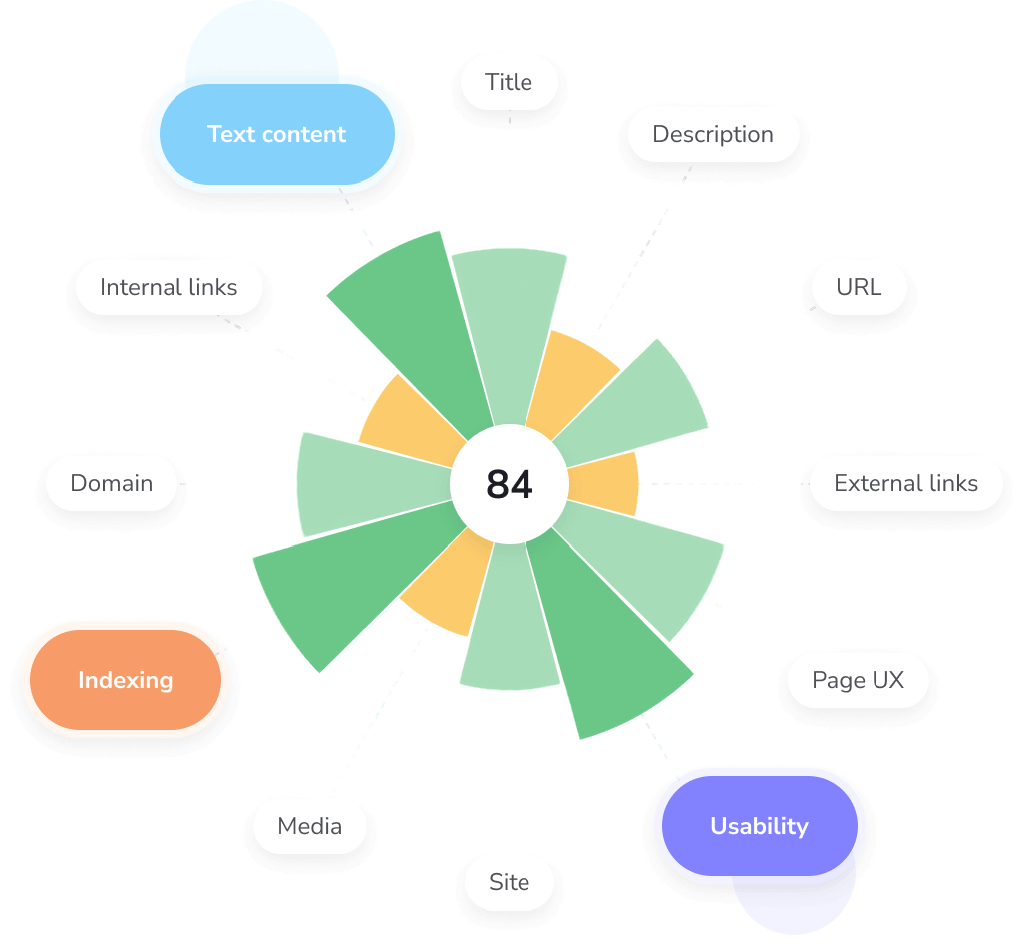
Get an instant SEO page analysis report
Learn how well your page is optimized for search engines and people

What is SE Ranking’s On-Page SEO Checker?
The On-Page SEO checker provides a list of actions you can take directly on a page to improve its rankings. It reviews the page’s elements and metrics to assess whether the content is relevant to users and provides a positive user experience.
Take advantage of the opportunity to improve your on-page SEO and gain complete control over your pages.
What’s inside the On-Page Checker
See how the On-Page Audit identifies, prioritizes, and helps you fix SEO issues.
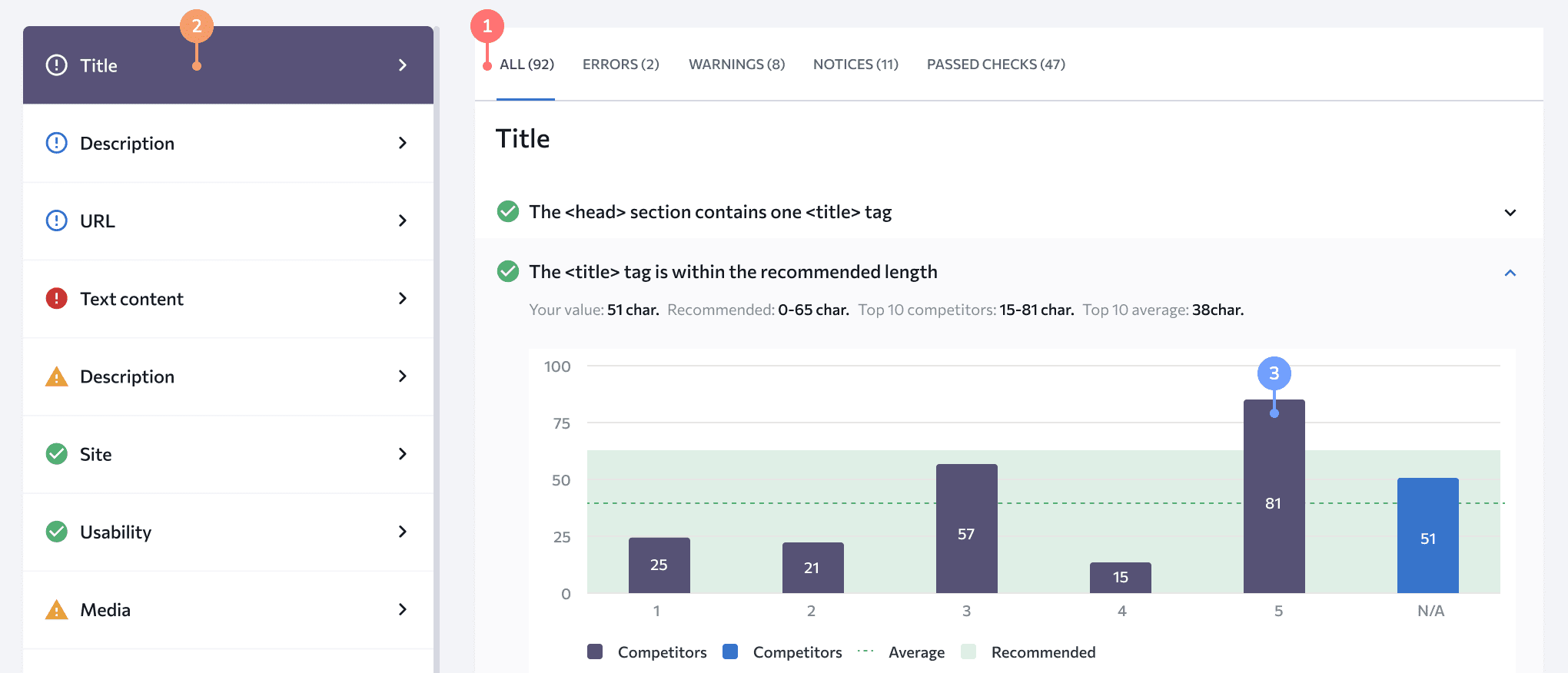
On-page tool groups issues based on their importance and urgency into four lists: errors, warnings, notices, and those that don’t require action.
Issue report categories show the current and recommended values for every metric based on page SEO factors related to metadata, text content, user experience, etc.
Fix recommendations and metric comparisons provide you with actionable insights on how your landing pages can be improved to outrank the competition.
Get an instant SEO page analysis report
Learn how well your page is optimized for search engines and people
Scale on-page audits across your entire client base
Access on-page audit data via SE Ranking API or surface optimization insights live
inside AI assistants via MCP
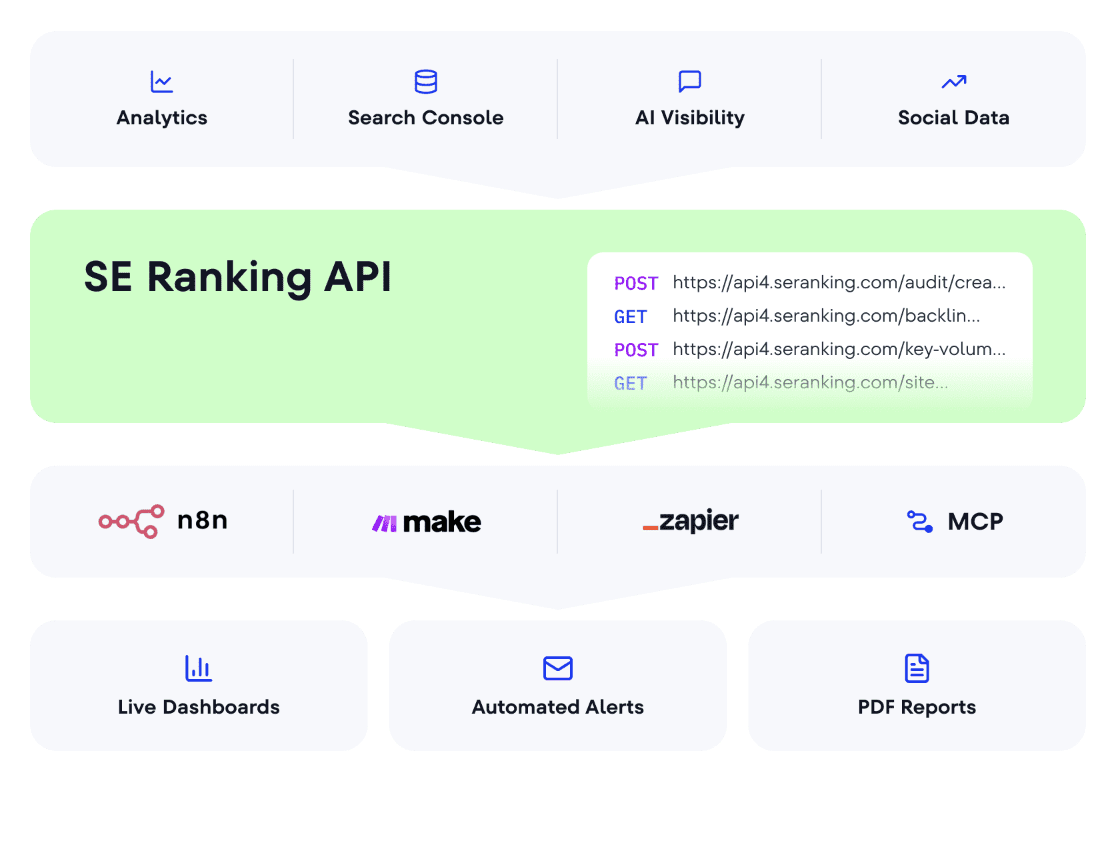
On-page data where your workflows live
Pull page optimization scores, issue flags, and content recommendations directly via API into your own tools and internal dashboards.
Audit reporting that fits your process
Connect on-page data to Data Studio or your reporting stack and deliver client-ready optimization reports without building them from scratch each time.
Automated audits across every client project
Trigger on-page checks and issue tracking automatically via Make.com, n8n, or Zapier without manual runs.
On-page insights inside your AI assistant
Ask Claude, ChatGPT, or other AI assistants about any page’s optimization status via MCP. Describe the issue, get structured data and context back immediately.
Get a data-driven roadmap for page optimization with our AI-powered tool
Prioritize on-page SEO issues
Create your own custom on-page tasks for every target URL. Manage your SEO page analysis and optimization workflow and sort action items by priority, category, and status.
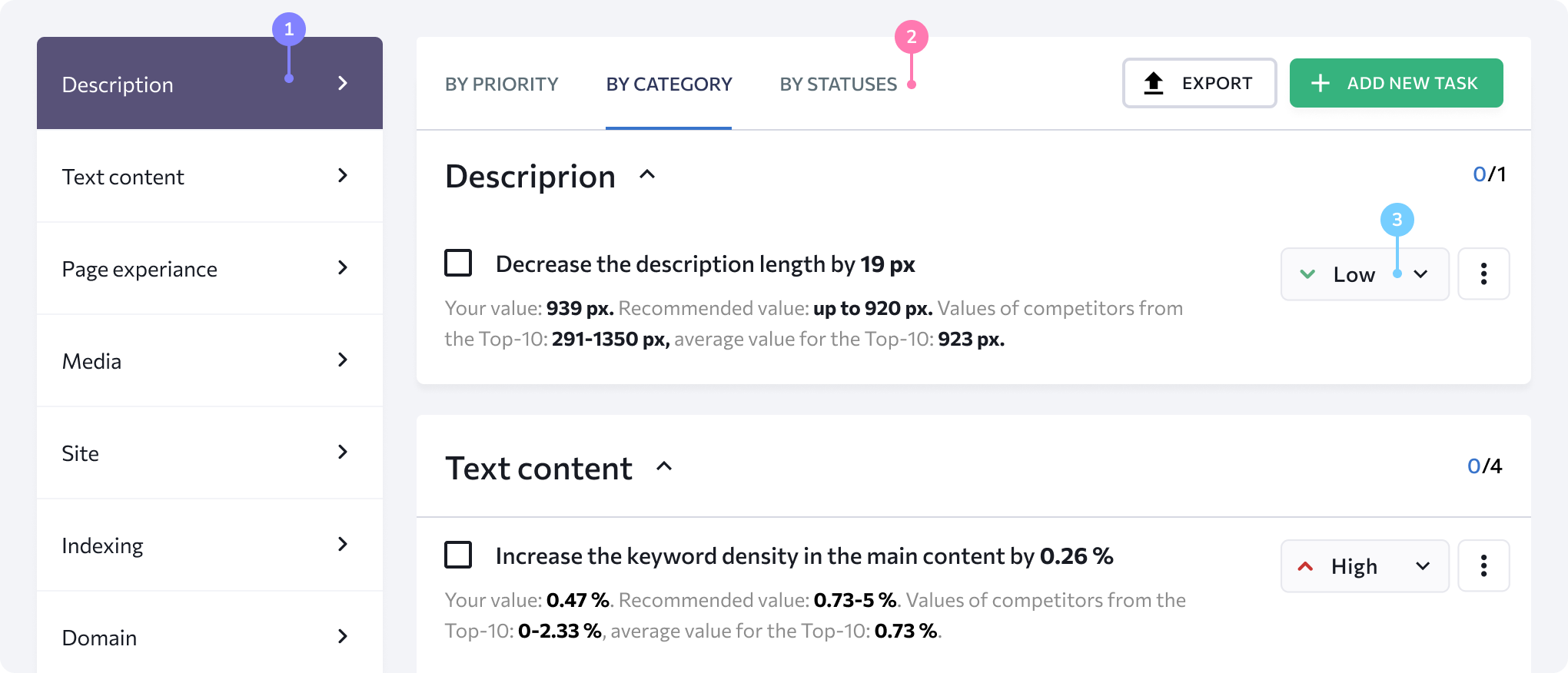
Priority (high, medium, low) depending on how each task can improve the overall quality score
Categories that influence rankings such as Text content, User experience, Media, etc.
Status (to do, done, ignore) that shows how your improvements are being implemented
Dozens of on-page SEO factors tested
Use our on-page grader to review your page’s overall optimization status, get a full breakdown of each ranking factor, and identify what to fix.
Content analysis
Any web page’s content must be unique, relevant, bring value, and easily satisfy the search intent of its target keyword(s). Pay attention to content uniqueness, the keyword density (the ratio of target keywords to ordinary text in the overall word count), the word count in comparison to top-ranking competitor landing pages, use of headings on the page to give it structure, and other factors.
Key on-page SEO elements
Besides the content itself, the most essential on-page elements that must be optimized on every web page are title tags, meta description, header tags, internal links, URL structure, and keywords. Understanding their importance for both users and search engines and implementing them correctly on your landing pages will help you create better and clearer content.
Link analysis
External links on your website linking out to third-party sites, backlinks from third-party sites pointing back to your site as well as internal links within your site pointing to other pages of the same site are important since there’s a direct correlation between the quality and quantity of links and how much search traffic your site receives. Links signal Google that a site is quality and citation-worthy.
General metrics
Keeping tabs on the backend of your website will help drive your page SEO. Pay attention to such factors like SSL certificate expiration date, use of a secure HTTPS connection, as well as the page’s organic traffic forecast given the current setup. And since your site’s landing pages don’t exist in a vacuum, benchmark all of this data against your top competitors.
Page experience
Page experience signals measure how website users interact with web pages. These signals include page load time, Core Web Vitals (Cumulative Layout Shift, First Input Delay, and Largest Contentful Paint), mobile-friendliness, HTTPS, safe-browsing, and intrusive interstitials guidelines. Currently, page experience signals are taken into account by search engines when ranking websites.
Indexing
If your pages aren’t indexed, they are basically not read by search engines. This means that they won’t appear in SERPs no matter how much SEO you do on them. Before doing anything else, make sure to check the indexing status of your pages to verify that they can be indexed. Plus, run a scan of your robots.txt file to see if it is set up correctly and search engines can read it.
Image analysis
Image SEO involves activities like giving images descriptive file names and using hyphens to separate the words, optimizing the file size so that the quality is maintained while the image doesn’t slow down the page and doesn’t negatively affect page rankings, adding image alt tags and occasionally including appropriate keywords in them to help search engines understand what’s depicted on them.
Get started with our On-Page SEO Checker
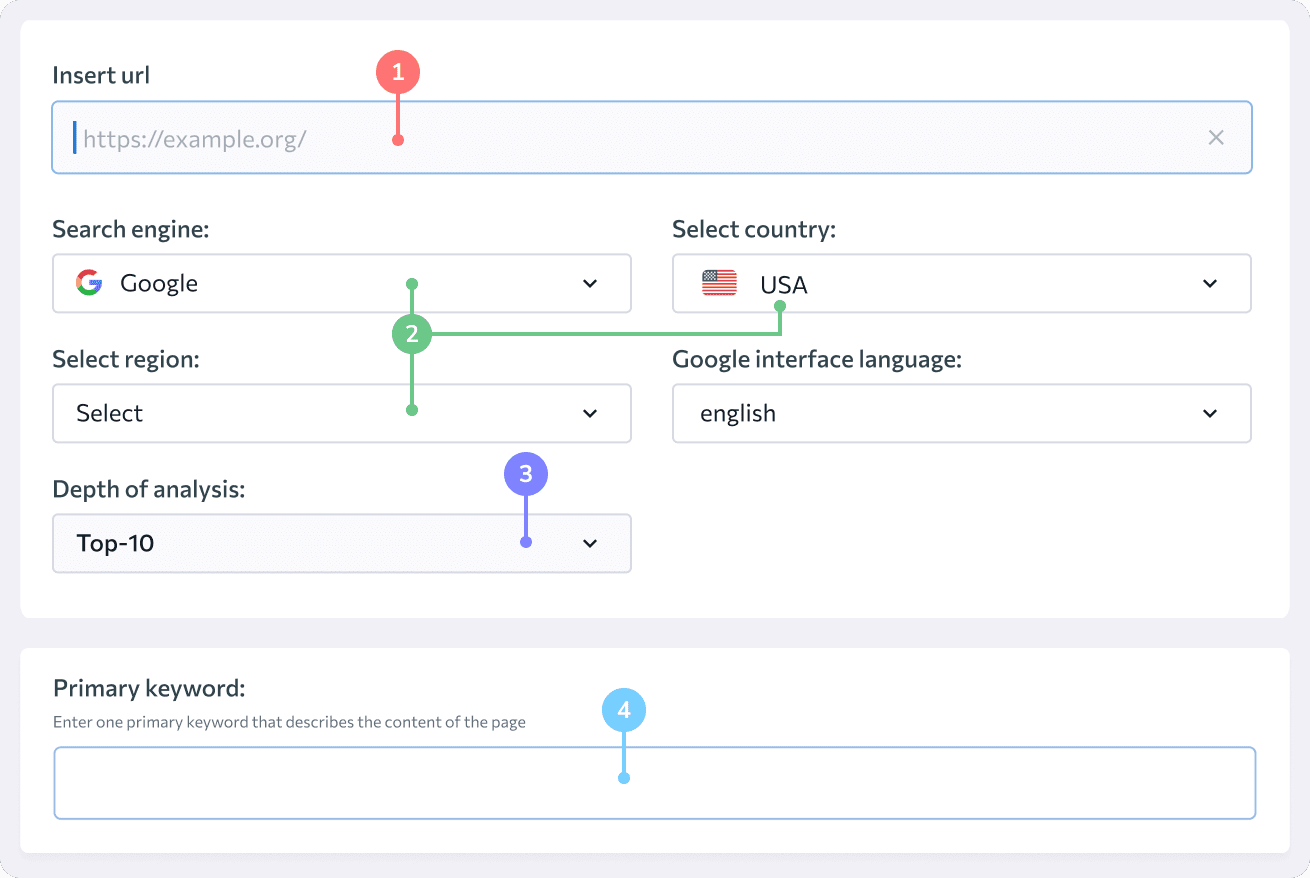
Enter a URL
Choose a search engine and location
Decide how many search results to analyze
Add 1 primary and up to 30 secondary keywords
Proudly chosen by businesses worldwide







Start improving your on-page SEO today
No credit card required